




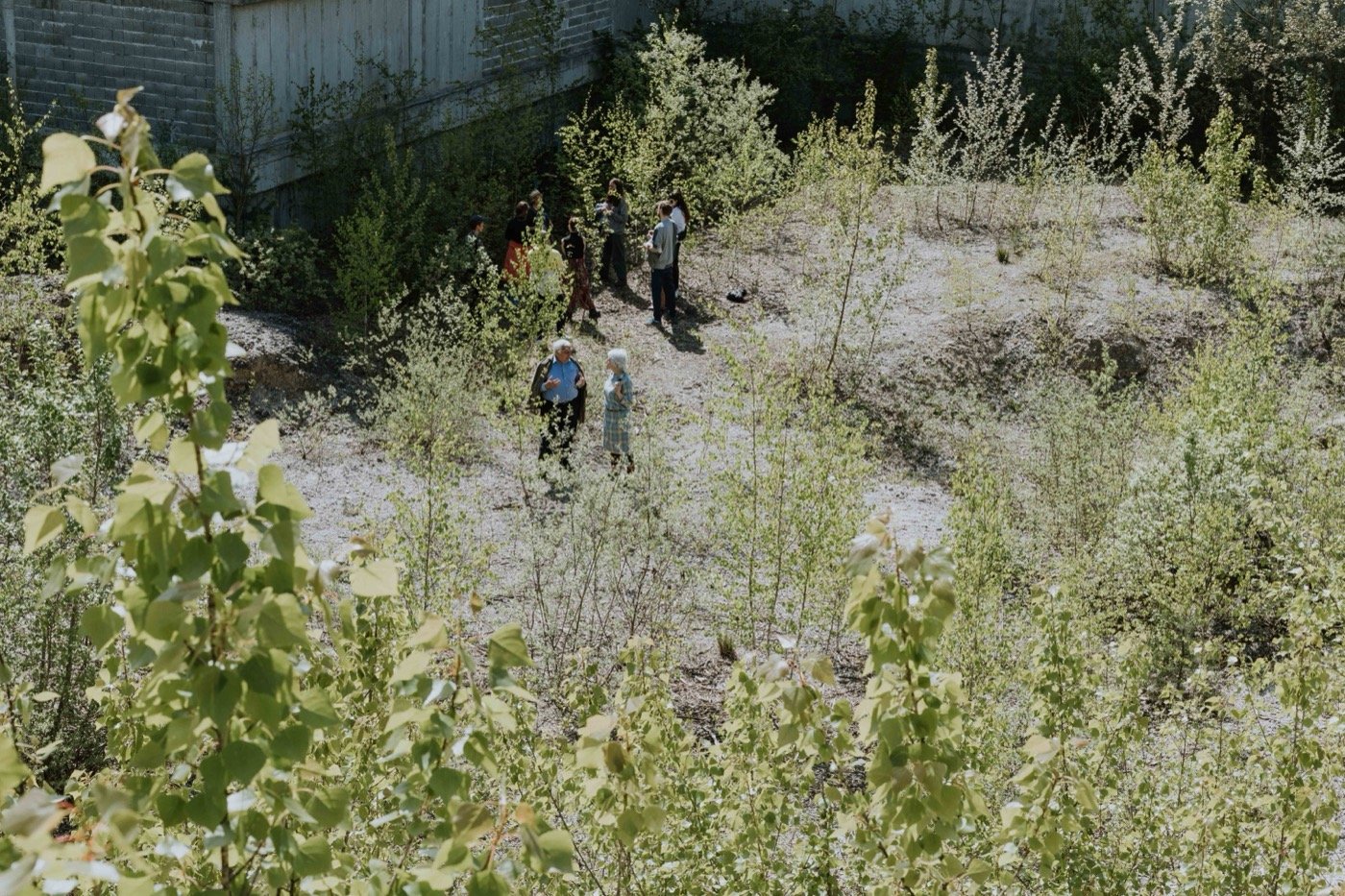
Krater Collective* is a group of artists, architects, designers, biologists, and many others, whose work is situated on a plateau above a 12-metre-deep hole dug by extracting gravel (you figure the name) on the grounds of former military barracks. Owned by the Slovenian Ministry of Justice, which now leases this 1.8-hectare piece of land for temporary use on an annual contract, the conditions of a construction fence left the space unkempt for almost three decades before officially allowing the human hand to actively participate in the spontaneous ecosystem evolving there.
This year, Krater Collective received a 2025 LILA Special Recognition. The jury noted Krater’s “capacity to open space for multispecies encounter via humility and restraint”, and its refusal to aestheticise ruin as spectacle. In the following article, we speak of Krater, tackling the question of new urban nature typologies and connecting those spontaneous pockets into large-scale biodiversity infrastructures, activated by maintenance — or care. While Girona Shores by EMF is seen as an exemplary project, many cities and practitioners struggle with the temporality of such endeavours, and with a lack of tools or systemic support. Municipalities do have maintenance schedules and regimes for specific public spaces, yet these are largely not acted upon, or refined enough to contribute to continuous urban landscapes that would allow for greater biodiversity and resilience.
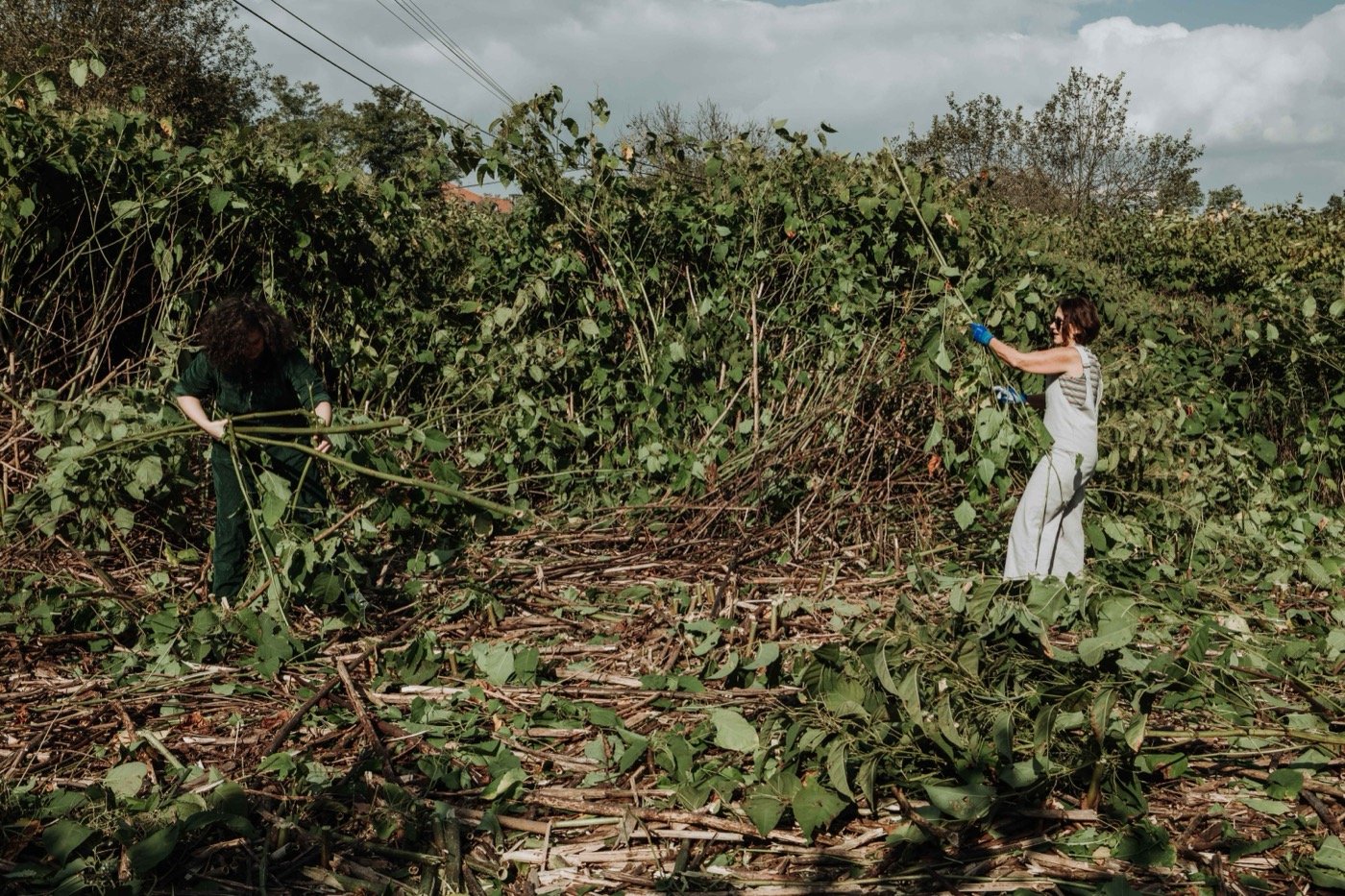
The old chestnut formalist tree lines speak of a time before Krater, while the overgrowing spontaneity of pioneering pines and weeds from Japan and elsewhere reaches the novel urban ecosystem tag. When humans returned in 2020, they joined the emerging cohort of more than 220 species in a precarious way, similar to the space they are tending. While their moves are calculated, aimed at minimal interventions, and especially bringing attention to the eradication of such spaces and biodiversities due to the need for economic benefit, they do keep the invasives in check by creative ways of new materials production.
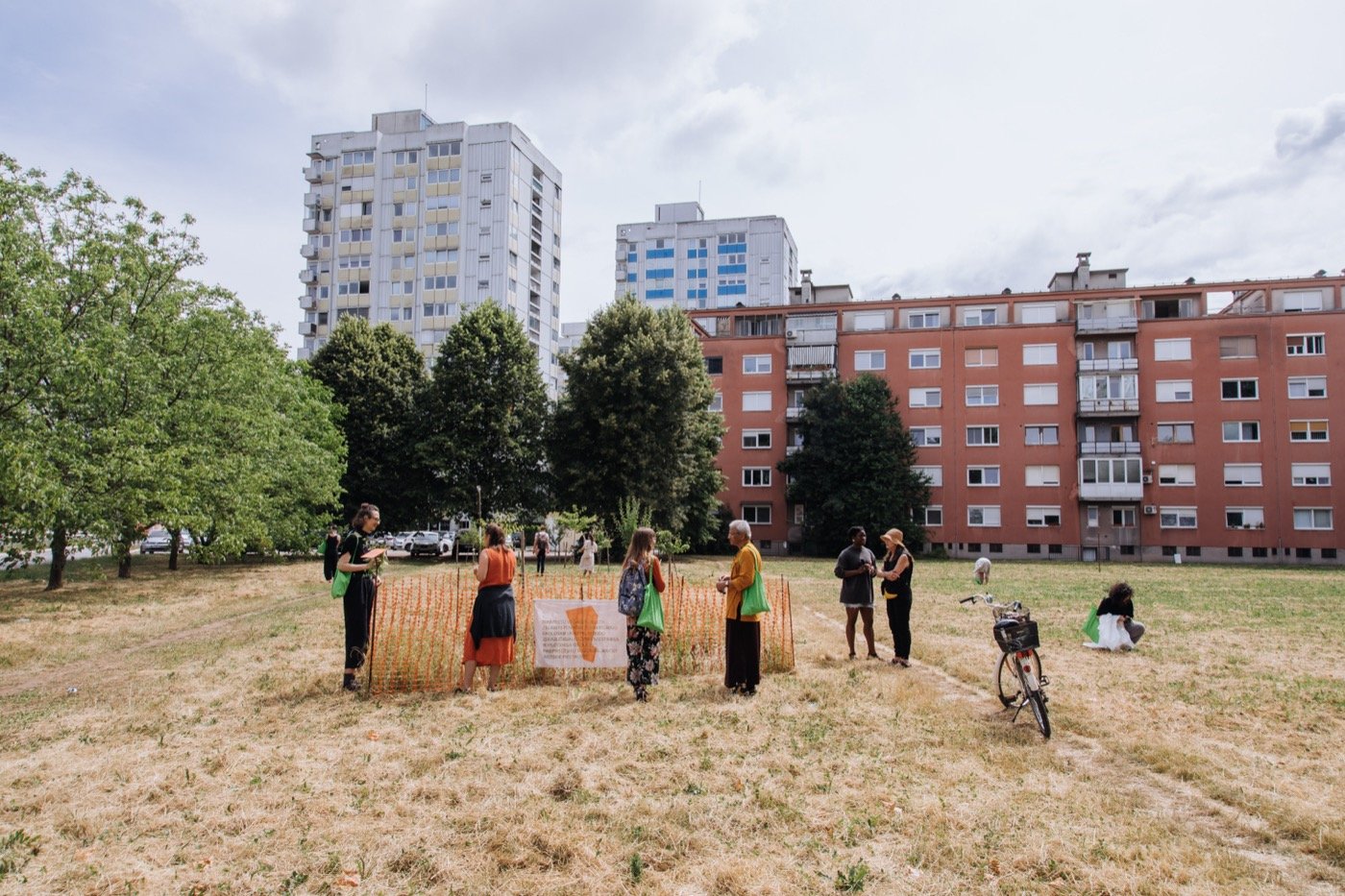
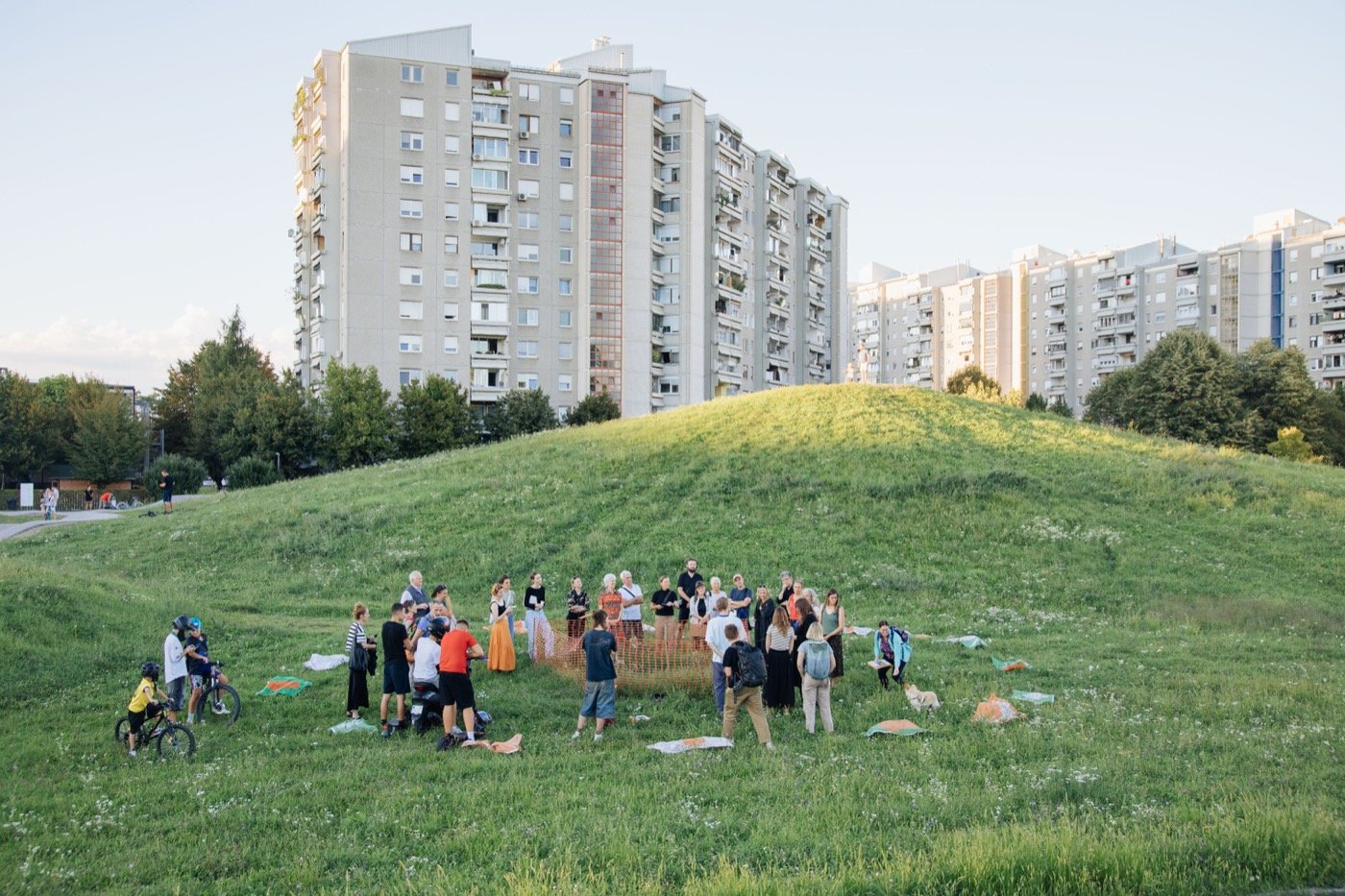
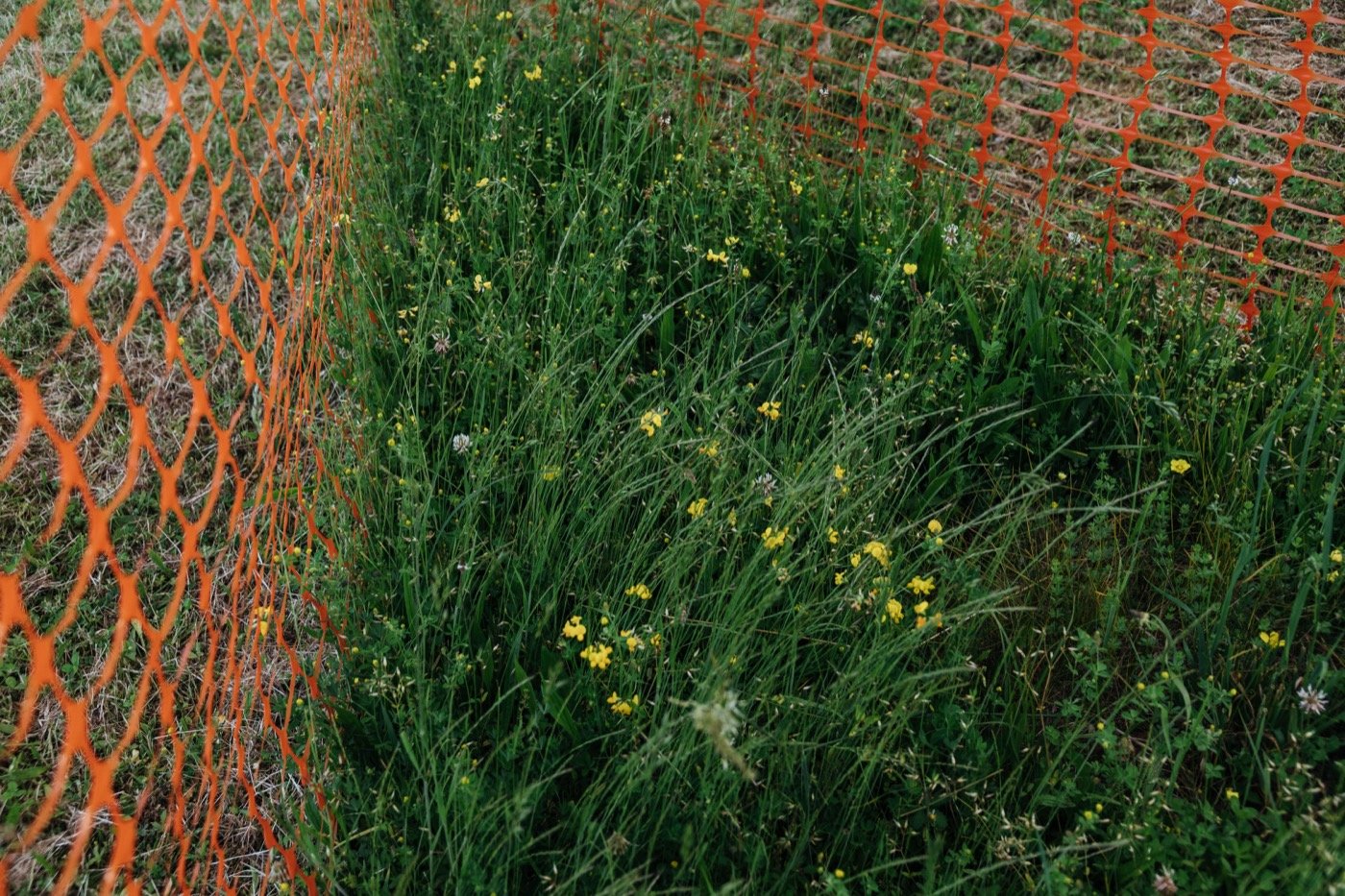
While landscape architects are more or less successfully convincing their clients into less rigid designs where possible, acknowledging the need for incorporating openness for the future, following the knowledge and ideas accumulated through decades of observations, such void spaces are mostly not yet recognised as speculative biological hubs in need of new policies of protection by the officials. Krater Collective elevate the debate of the urban ecosystem typology by working on projects outside their fenced-off domain. We recently spoke at length with Debra Solomon on Multispecies Urbanism, who joined Krater Collective on a recent two-year project, Crafting Biodiversity. The municipality was willing to lend the space, and through a seemingly artistic project, a rather subversive practice emerged. The team worked in public greenspace, fencing off parts of the land throughout the city, changing their care regimes and introducing phased mowing to increase biodiversity through maintenance.
Ecological succession is not a neutral process. It is shaped by institutions. Whether cities produce turfgrass monocultures or biodiverse meadows and wetlands depends on policy, budgets, and regulatory vision.
Nuances of Urban Green
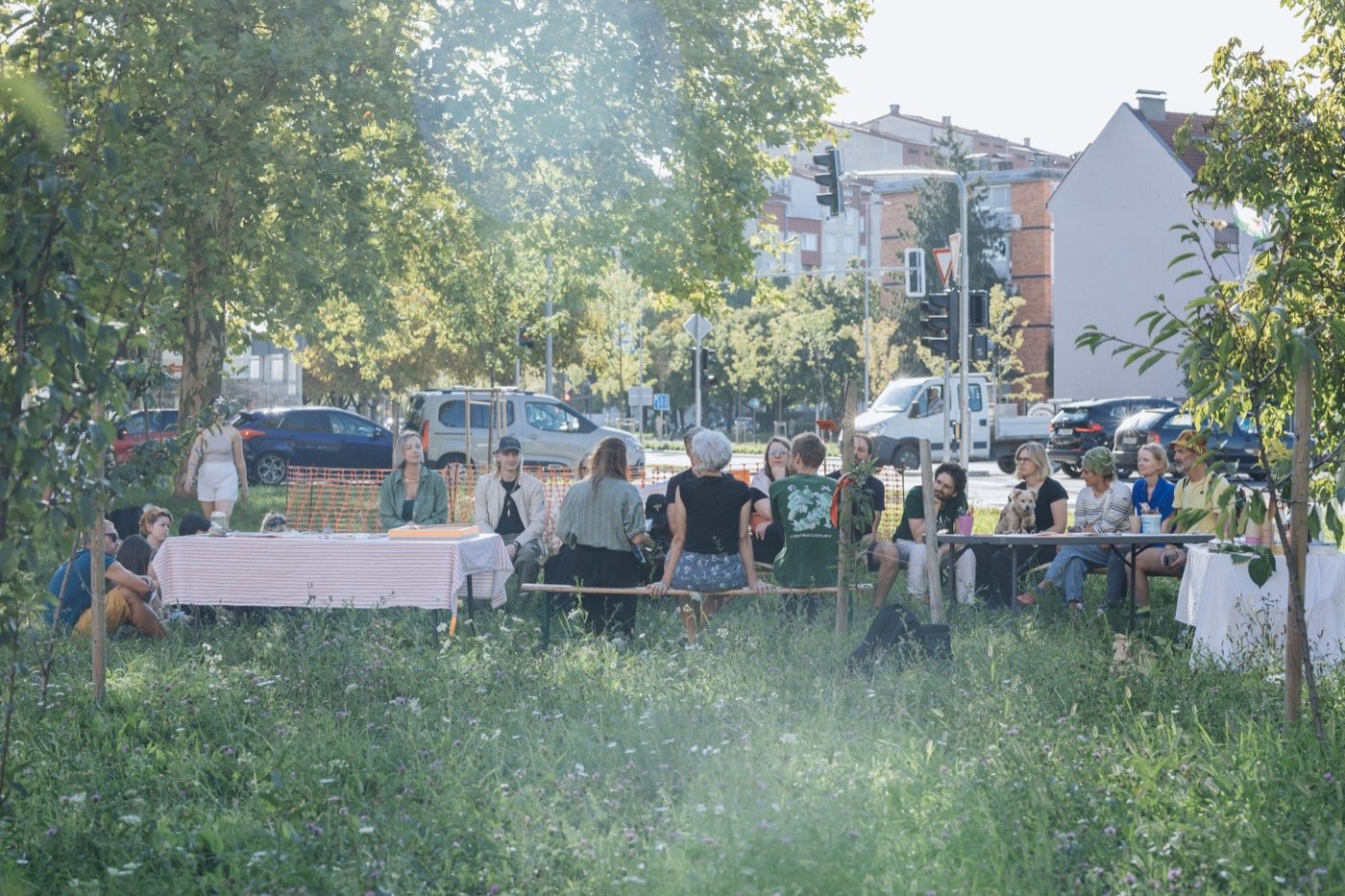
There is official green and unofficial green, public and private green, recognised/categorised and unrecognised/uncategorised—protected and precarious green. Designated green surfaces, such as parks or hedges along streets, are in public care, but there is also a vast surface of privately owned gardens and lands, as well as abandoned lots. Such uncategorised, unkempt green appears as “feral lands,” as the Krater Collective calls these self-developed ecologies. These often act as biodiversity hotspots, counterbalancing heat islands and the lack of food for the animal kingdom, while designated green surfaces are heavily managed and burnt out in the height of the summer season. As Debra Solomon puts it: “Ecological succession is not a neutral process. It is shaped by institutions. Whether cities produce turfgrass monocultures or biodiverse meadows and wetlands depends on policy, budgets, and regulatory vision.”
Connective Corridors
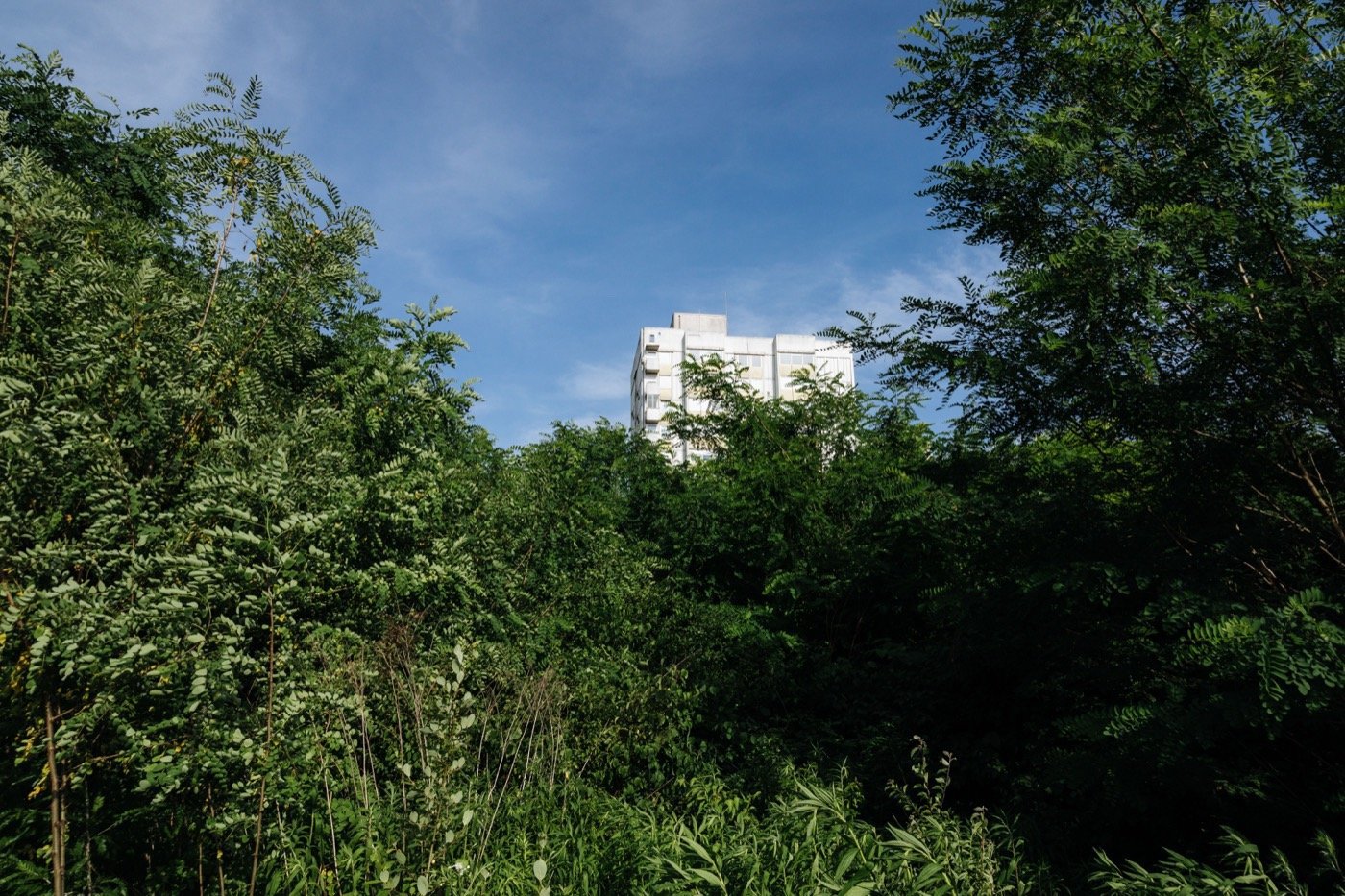
Crafting Biodiversity engages local residents, public institutions, biologists, designers, infrastructure activists, landscape architects, city officials, and multispecies actors — in a biodiversity-boosting project—imaginatively connecting 18 selected lots into an ecological corridor with the potential to reach the green hinterland and nature-protected areas. In doing so, the project addresses fragmented biodiversity and seeks to stitch these fragments together while enhancing existing ecologies. By overstepping established governance boundaries, it offers a critique of partial mapping and official green-infrastructure development plans. Crafting Biodiversity recognises the importance of already existing structures and works through incremental, small-scale adjustments.
Methods of Crafting Biodiversity
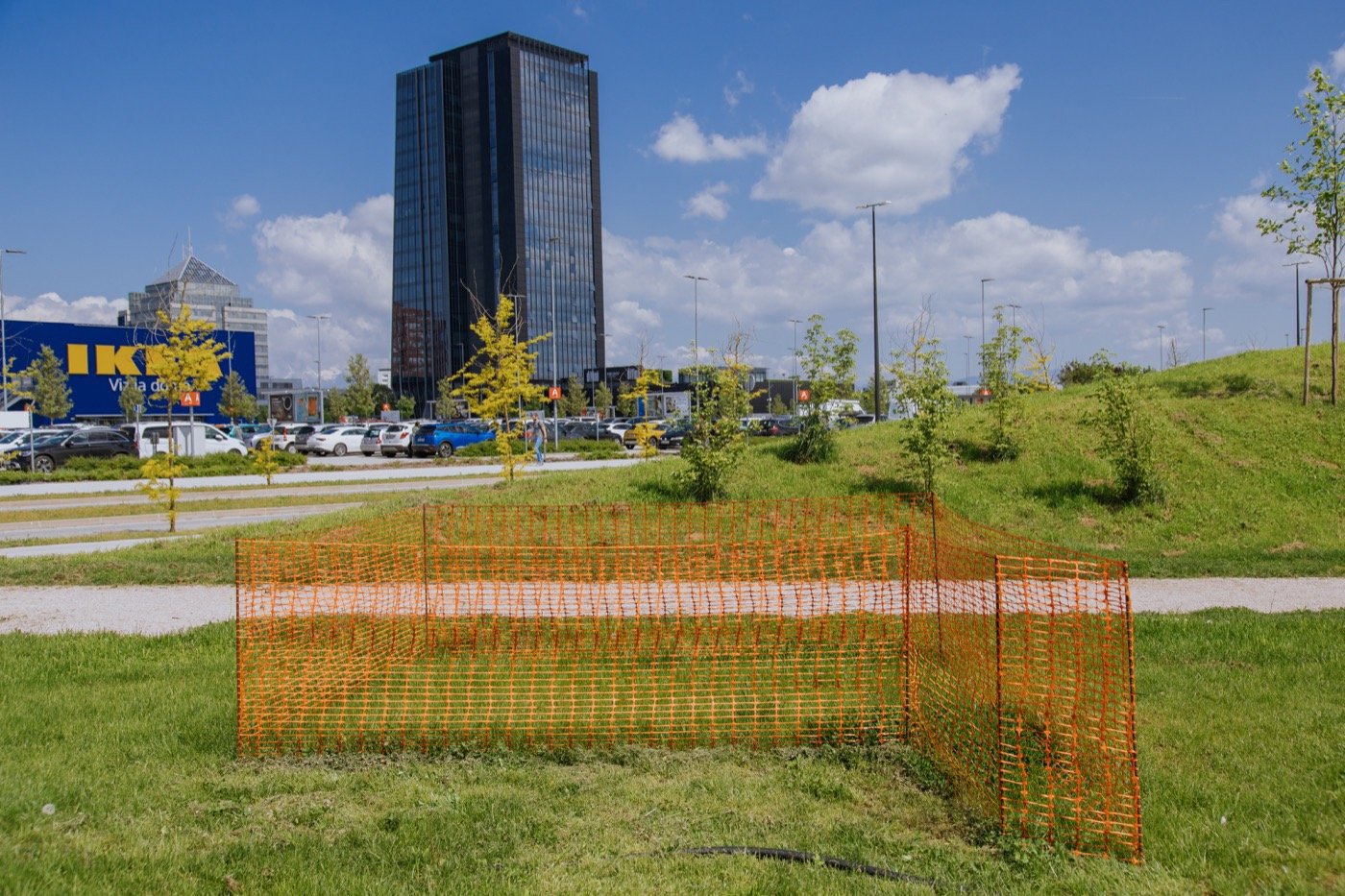
New parks often prioritise visual appeal and real-estate value over ecological function. The consequence is an ecological monoculture, maintained through standardised practices: frequent mowing, ornamental plantings, and a deep distrust of spontaneous growth. As Gaja Mežnarić Osole notes, “Existing urban greenspaces are over-managed according to opaque maintenance guidelines that fail to respond to biodiversity needs.” Crafting Biodiversity changes dominant maintenance regimes by applying techniques such as phased mowing and “ecological transplantations” from nearby feral patches. These interventions resist homogenisation and restore ecological agency to urban spaces not categorised as ‘conservation’.
Care is a design act. Maintenance is the site of innovation, creating a new urban aesthetic: one of process, reciprocity, and repair.
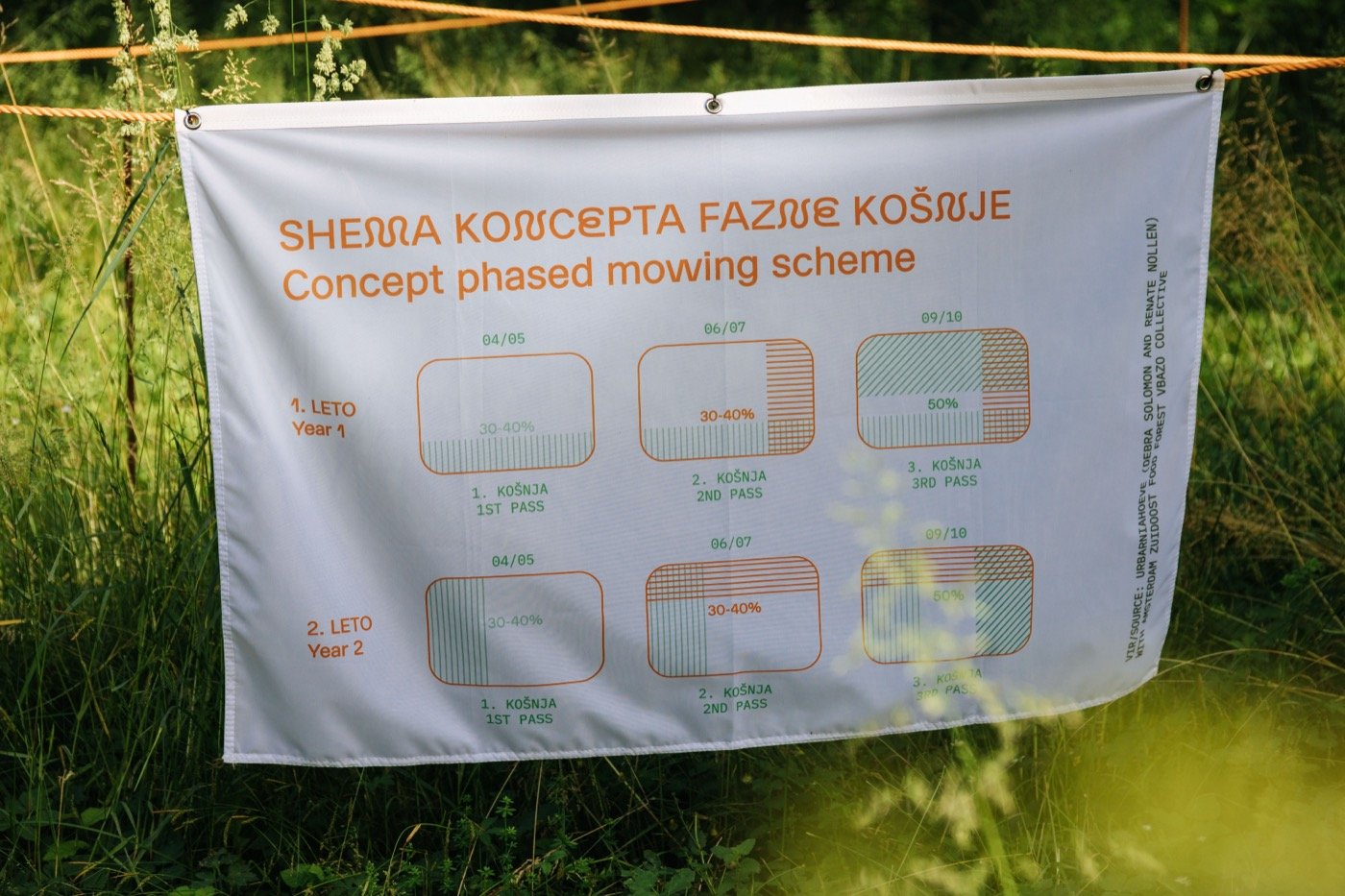
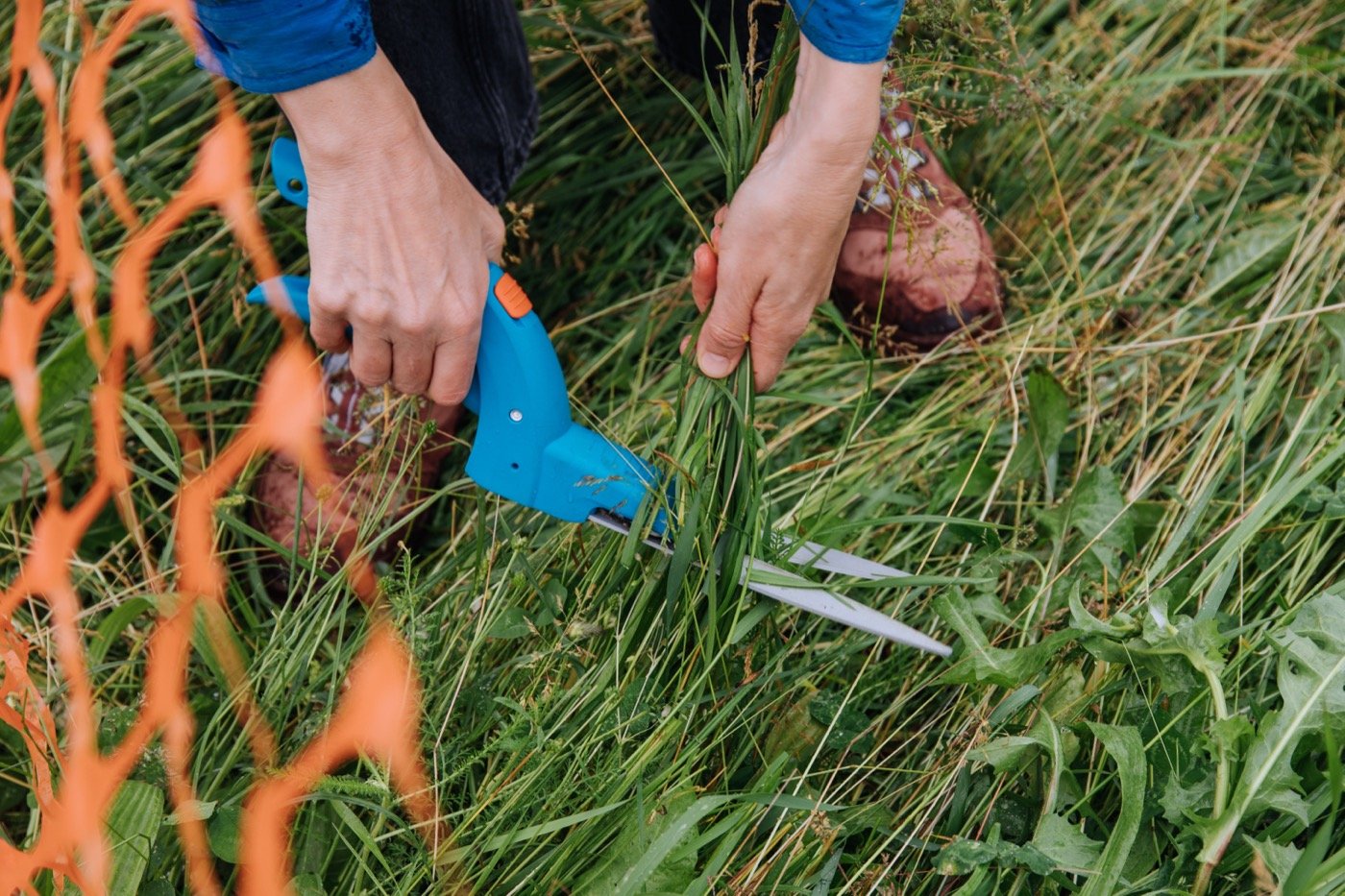
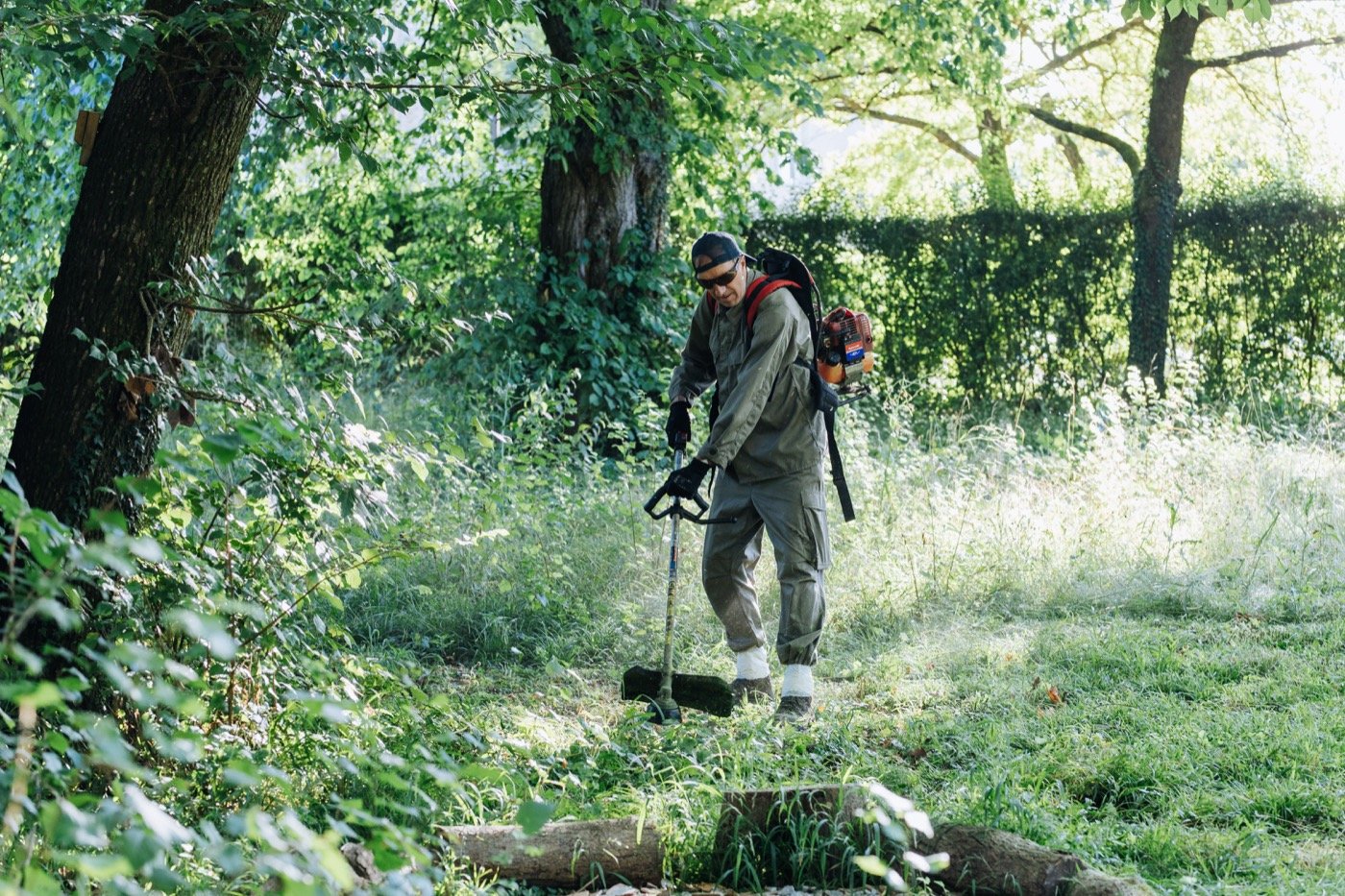
Phased mowing is a fairly simple maintenance technique that imitates grazing. In the first pass, in spring, only a third is mown. This allows flowers to develop seeds. Solomon continues: “Then in June or July, we can mow a second third that overlaps a third of what we previously mowed in this first session.” This produces different ages of plants: some with flowers, others going to seed, root systems of lighter plants developing, and heavier plants beginning to lignify and become woody. In autumn, the last phase cuts through half of the area, again overlapping by a third with another phase. In the meantime, paths and areas for regular use are mown regularly, as are the edges of meadows, to give a neat appearance. “But in this way, we have maybe ten different ages of plants, and ages where insects lay their eggs and have two-year or one-year cycles. They can mate, there’s food for the birds, nectar for the insects — all kinds of insects — there’s a place to hide, there’s refuge. And this way, biodiversity increases very quickly with a very high impact,” Debra concludes.
Co-Stewarding
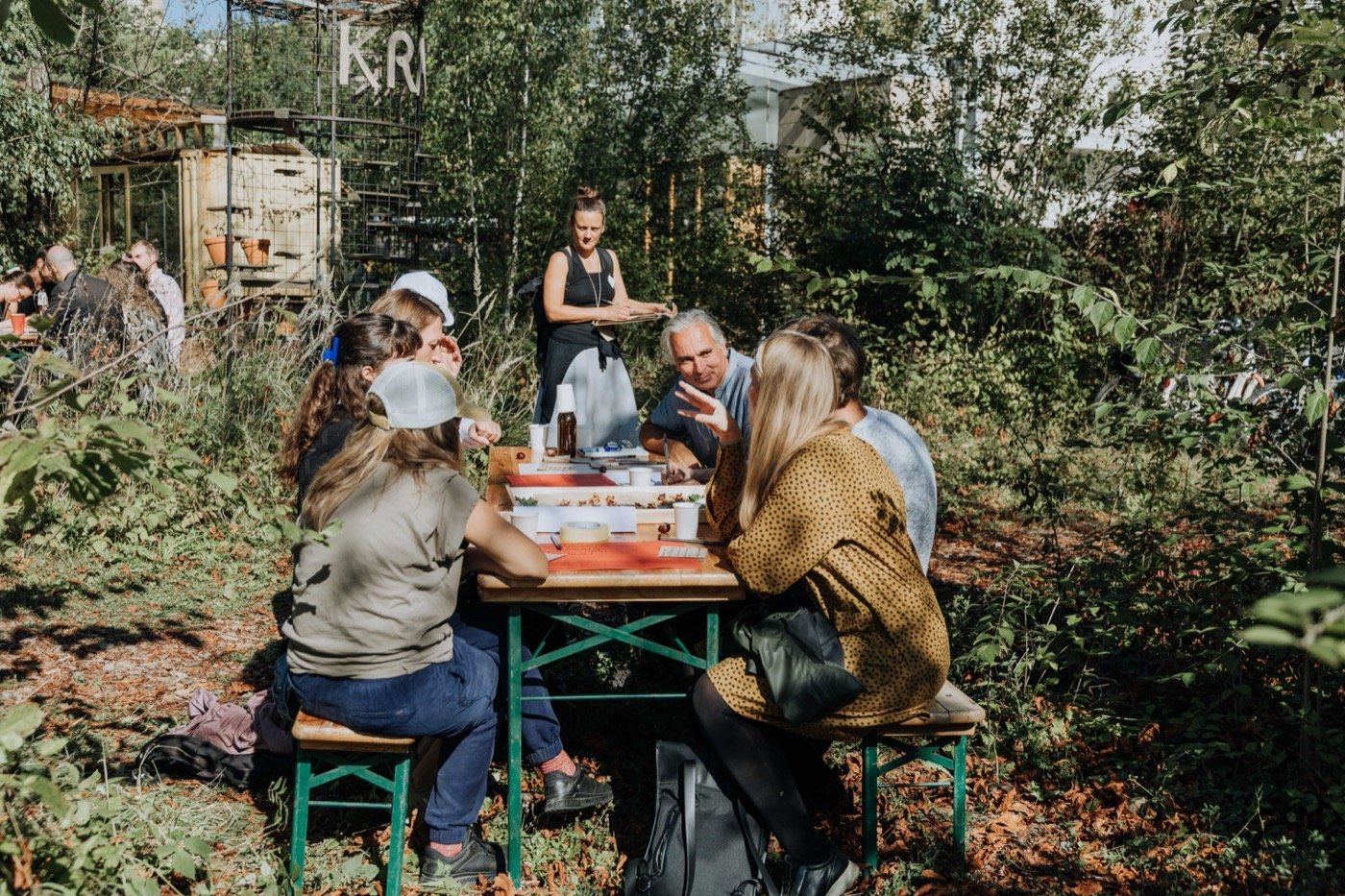
While the project is speculative, it is also very real. Photo documentation throughout the year and species inventories by biologists at different times have shown increased biodiversity in the hijacked lots. By observing changes attentively, these observations can inform further decisions. Krater’s community embodies the ethos of multispecies stewardship. Their day-to-day presence—observing, documenting, adjusting—has generated a situated understanding of the site’s dynamics. This shifted view moves beyond the concept of ecosystem services and acknowledges multispecies labour. “This shows how ecological repair is not solely the domain of the natural sciences,” Gaja says, “but a collective project requiring multiple forms of knowledge and experience.” In this sense, stewardship becomes both ecological and cultural. This expanded sense of care as co-production destabilises the anthropocentric view of urban planning. It situates cities as assemblages of labour—fungal, vegetal, animal, and human—each indispensable to the others’ survival.
Crafting Long-Term Ecological Relations
At the core of Crafting Biodiversity lies a simple but radical proposition: that care is a design act. Maintenance becomes the site of innovation, creating a new urban aesthetic—one of process, reciprocity, and repair—cultivating diverse meadowscapes. At the project’s conclusion, the pilot biodiverse parcels were “returned” to the city and its residents, testing whether this practice could transition from artistic experiment to municipal policy.
Osole sums up the effort: “Land rights movements have long resisted imperial domination to defend ecosystems—a fight that persists in cities today as communities push for urban tree replanting, clean water, community gardens, feral ecologies, and legal recognition of nature, while many cities—including Ljubljana—lag in integrating multispecies perspectives into official biodiversity governance.”
“The role of civil society,” says Gaja, “is to continually push governing bodies to govern better. There is no endpoint, no moment when the work is done.” By recognising the agency of multispecies labour, the care and crafting of biodiversity infrastructures become of great value.
*All images made by Amadeja Smrekar.
Authors of the project: Gaja Mežnarić Osole, Andrej Koruza (Trajna/Krater collective) with Debra Solomon.
Collaborators: Renata Šifrar, Karl Kaisel, Regina Vitány, Amadeja Smrekar, Danny Shaw, Katja Koncilja, Iva Špilak, Altan Jurca Avci, Rok Oblak, Katja Kolačič, Darko Petan, Tadej Golob.
Commissioners: Museum of Architecture and Design, Ljubljana.
* The Krater Collective is a group of transdisciplinary artists who have decided to transform their professions, studios and working conditions in order to act as advocates for a self-determined ecosystem in an abandoned construction pit in Ljubljana. As the pit is constantly on the verge of extinction, they cultivate a creative resilience to confront the urgency by inventing innovative tactics, events and formats, and by addressing administrative and other constraints as objects of artistic intervention. These actions call for alliances and community economies that open up new fields of regenerative, relational and critical creative practice. In addition to pledged practices such as the nurturing of biodiversity, Krater also hosts internationally renowned educational formats presenting new typologies of cultural work, laboratories for experimentation with biomaterials, exhibitions, conferences and other public programmes. Krater was a finalist for the NEB Award (2022), received a special mentions at the 35th Graphic Biennial (2023) and the LILA, Landezine international landscape award (2025) and was awarded the Plečnik Medal for the best Public Space (2023).
References
The catalogue of the MADE IN project, where Požar interviews Osole and Solomon, from which we draw some points and quotes:
Mežnarić Osole, G., & Solomon, D. (2025). Crafting Biodiversity: Design Innovation for Ecological Futures (in conversation with C. Požar, interview). In C. Požar, I. Borovnjak, & K. Vlajo (Eds.), Future Legacies: MADE IN Platform for Contemporary Crafts and Design. Museum of Architecture and Design, Ljubljana.
Crafting biodiversity builds on the critical discourse and accompanying actions co-developed with architect Danica Sretenović, which work as an advocacy strategy to integrate feral ecosystems into the urbanism of future-resilient cities.
See:
An Exercise in Feral Cartographies
https://koozarch.com/essays/the-feral-palace-education-as-a-design-urgency, and
From a Feral Plant to a Feral Site.
Topics in this article
Architecture — Art — Biodiversity — Botany — Care — Commons — Extraction — Extraction Sites — Interdependency — Landscape Architecture — Maintenance — Mapping / Cartography — Migrating Species — Nature-Culture Dialectics — Planning — Plant Agency — Politics of Public Space — Post-industrial — Production of Nature — Provocation — Resilience — Rewilding / Renaturalization — Ruins — Suburban Lawn — Synurbic Species — Teaching / Pedagogy — Third Nature — Urbanism — Wastelands —Search other topics:
