




Streets are among the most complex public spaces to design. By definition, public streets are a non-rivalrous and non-excludable public good, therefore, they should grant accessibility to all. Pedestrians, cyclists, public transport, cars, fire and emergency trucks, deliveries, all stake competing claims on the same limited surface. Streets are designed under the highest constraints, yet must provide for everyone. However, the hierarchy of uses changes over time, and street profiles have undergone radical transformations based on shifting needs and the prevailing notion of who comes first.
From Jane Jacobs, who recognised streets and sidewalks as the main public places of a city and its most vital organs, to Jan Gehl’s design ethos of Life Between Buildings, streets continue to accumulate functions. Linear mobility evolves into ecological and social performance. They are expected to accommodate not only movement and encounter but also water infiltration, carbon sequestration, shade, biodiversity, and multispecies migration, while remaining safe and efficient conduits for people and infrastructure above and below ground.
Streets are a local yet globally shared space, much like what Zaš Brezar argues of private gardens. Cars have long acted as extensions of private space, intruding into the collective realm. Yet there should be no privilege to buy this right over another’s right to use public space.
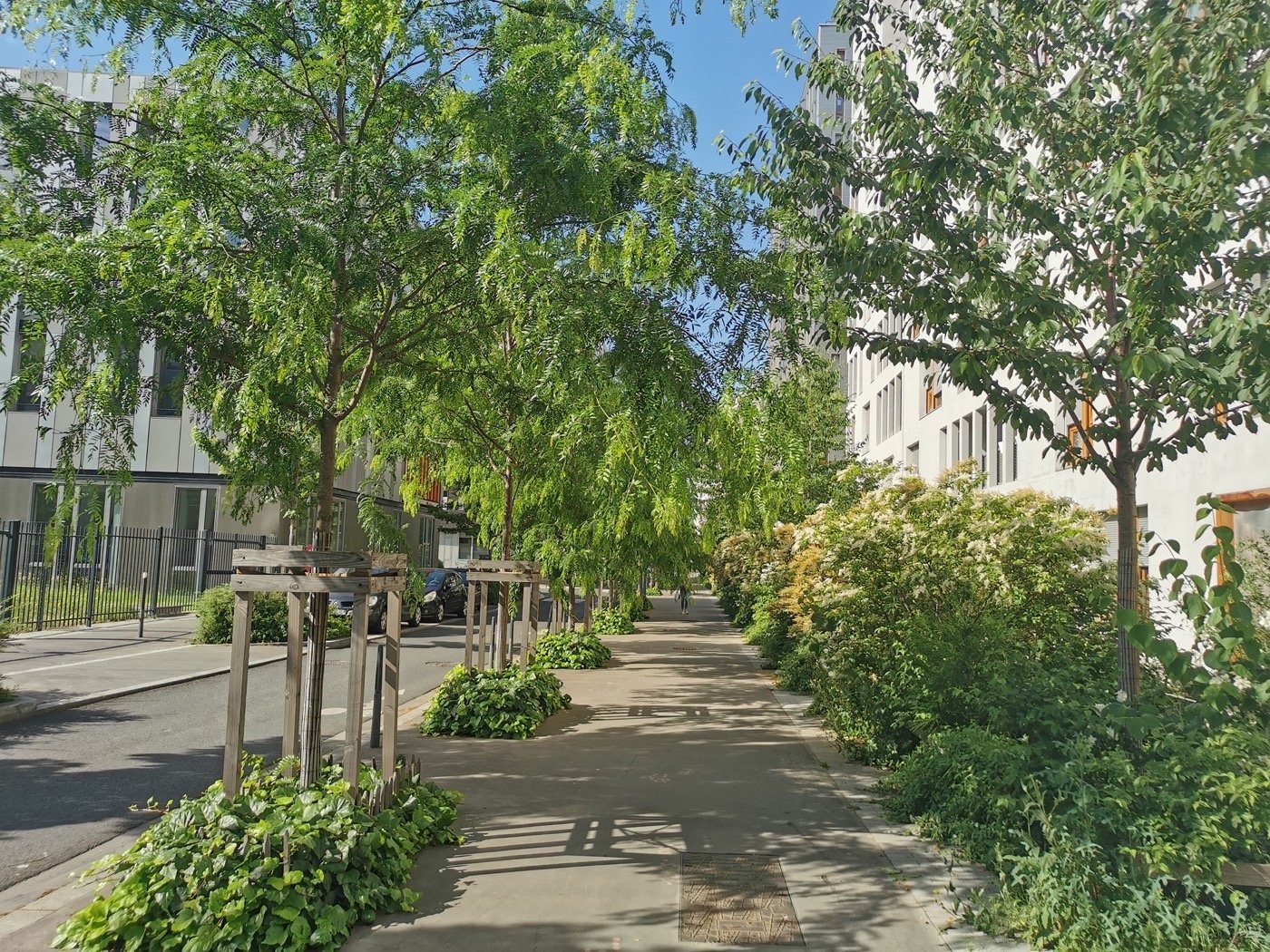
As cities withdraw rights previously granted to private vehicles, automobile traffic decreases and public transport networks expand. Micromobility with bicycles, scooters, and small electric vehicles fills the gap. Municipalities are developing strategies to reduce car intake into city centres through Park & Ride schemes, expanded transit routes, and pedestrianised zones, combating pollution, heat-island effects, and parking scarcity. Parks and green corridors are, in effect, advancing into the street.
Personal transportation is a primary driver of urban sprawl and the proliferation of intercity highways. Before the automobile era, streets were inherently shared. Children played where horses and carts passed; there were no playgrounds, and “safety” was social rather than engineered. When accidents and fatalities surged, the Complete Streets concept emerged: design standards prescribing equal consideration for all modes of transport.
The Shared Streets Study traces the rise of “shared space” since the 1970s, drawing from the Dutch woonerf and the American “home zone”. These aimed to reduce the speed and volume of neighbourhood traffic and reclaim the street as a space for residents and children.
Redistributing Hierarchies
The concept of shared streets is expanding from residential neighbourhoods into city centres and major thoroughfares, redistributing spatial hierarchies, temporarily and situationally. The defining feature is structural, not aesthetic: the street is redefined from conduit to commons. Projects that adopt shared-space principles soften or erase traditional hierarchies, kerbs, signage and priority lanes, replacing them with shared surfaces, lower speeds, an ecological layer, and spatial ambiguity.
Ambiguity, however, brings difficulty. Flattened kerbs can reduce orientation cues for the visually impaired; the absence of formal crossings forces new habits of coordination among users. Complex shared streets require mutual attention and coordination between users—they re-educate us by asking for attention to one another and our surroundings. The concept plays on our moral structures and places us in possible uncomfortable confrontations.
While we often hold an image of the Mediterranean public space in mind, when we speak of successful shared public spaces, the choreographed chaotic square/street/playground, the culture of public space varies from one locality to another. There is no one shared street typology we could template into.
The following selection of case studies shows further development of this shared domain.
Traditional Pedestrian Streets and Alleys
In historic city centres, narrow streets are dominated by pedestrians. Vehicular access is tolerated rather than designed for. The irregular surfaces and tight geometries of such places resist contemporary regulatory templates. Their geometry and texture enforce slow movement.
Lab D+H, with offices in Shanghai, Seoul and Los Angeles, transformed the declining commercial district of Yongqing Fang in Guangzhou, China, by reusing existing paving materials in new patterns to connect cultural and historic nodes. The intervention wove together economic revival, social memory, and ecological adaptation, extending an ecological layer onto rooftops where ground space was scarce.
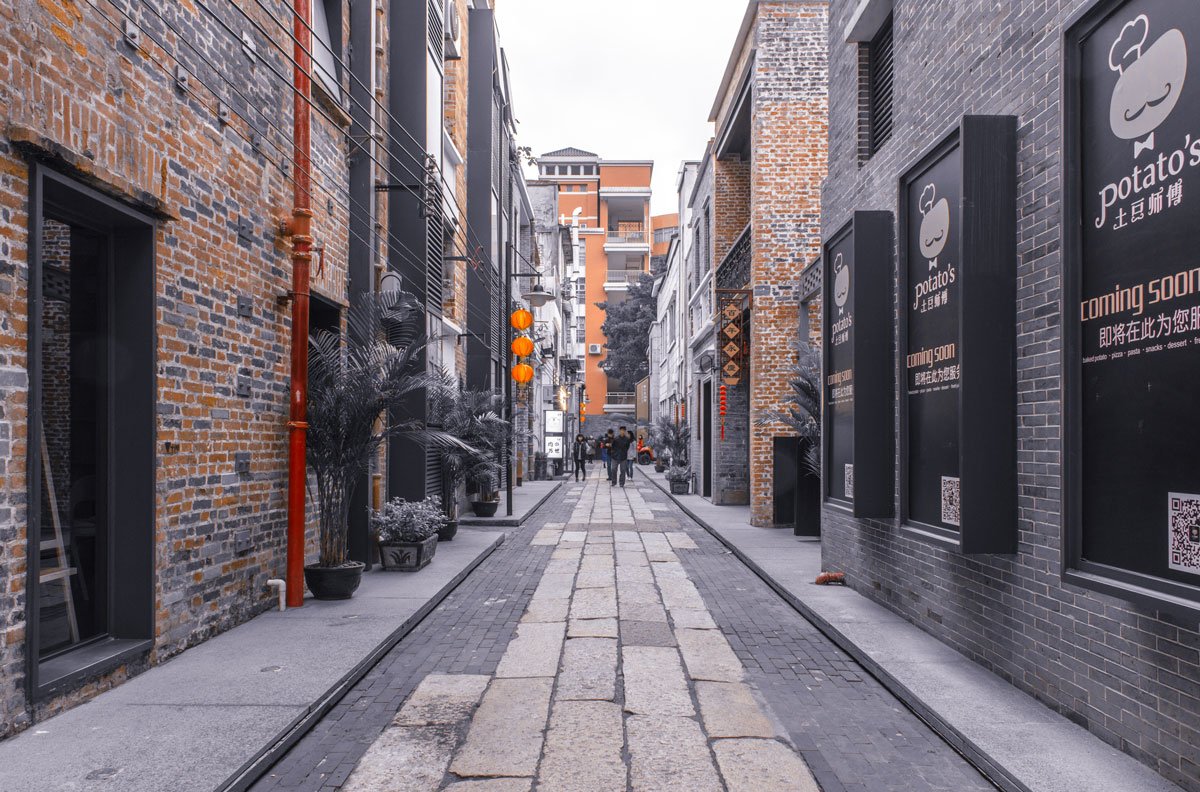
Dense centres are increasingly dominated by commerce and tourism. While they may not accommodate full ecological function, shared surfaces still serve as transitional social grounds between heritage and the contemporary city, with a slower-moving pace.
Social Space
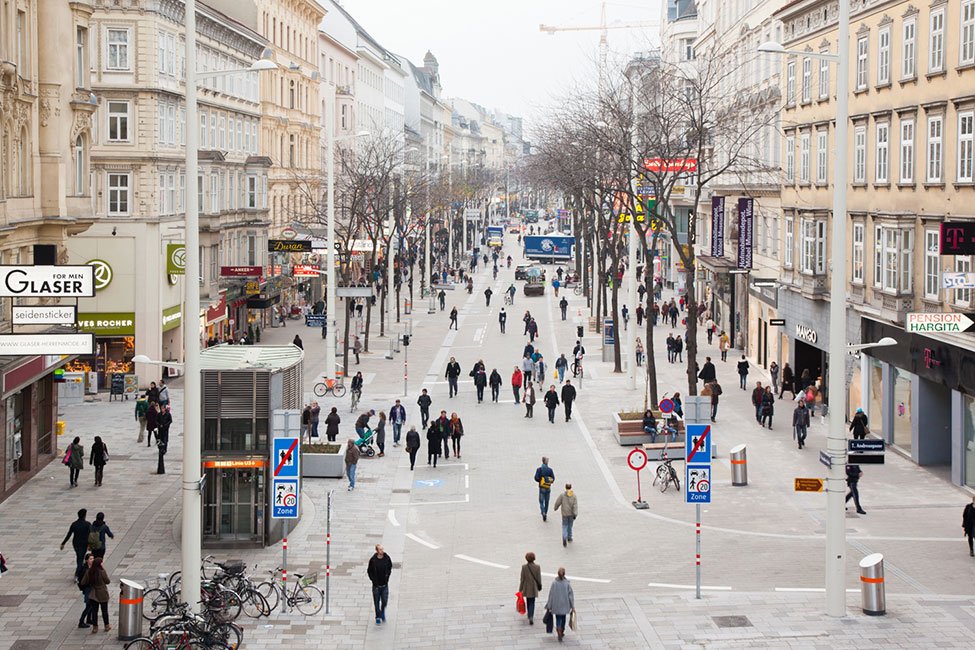
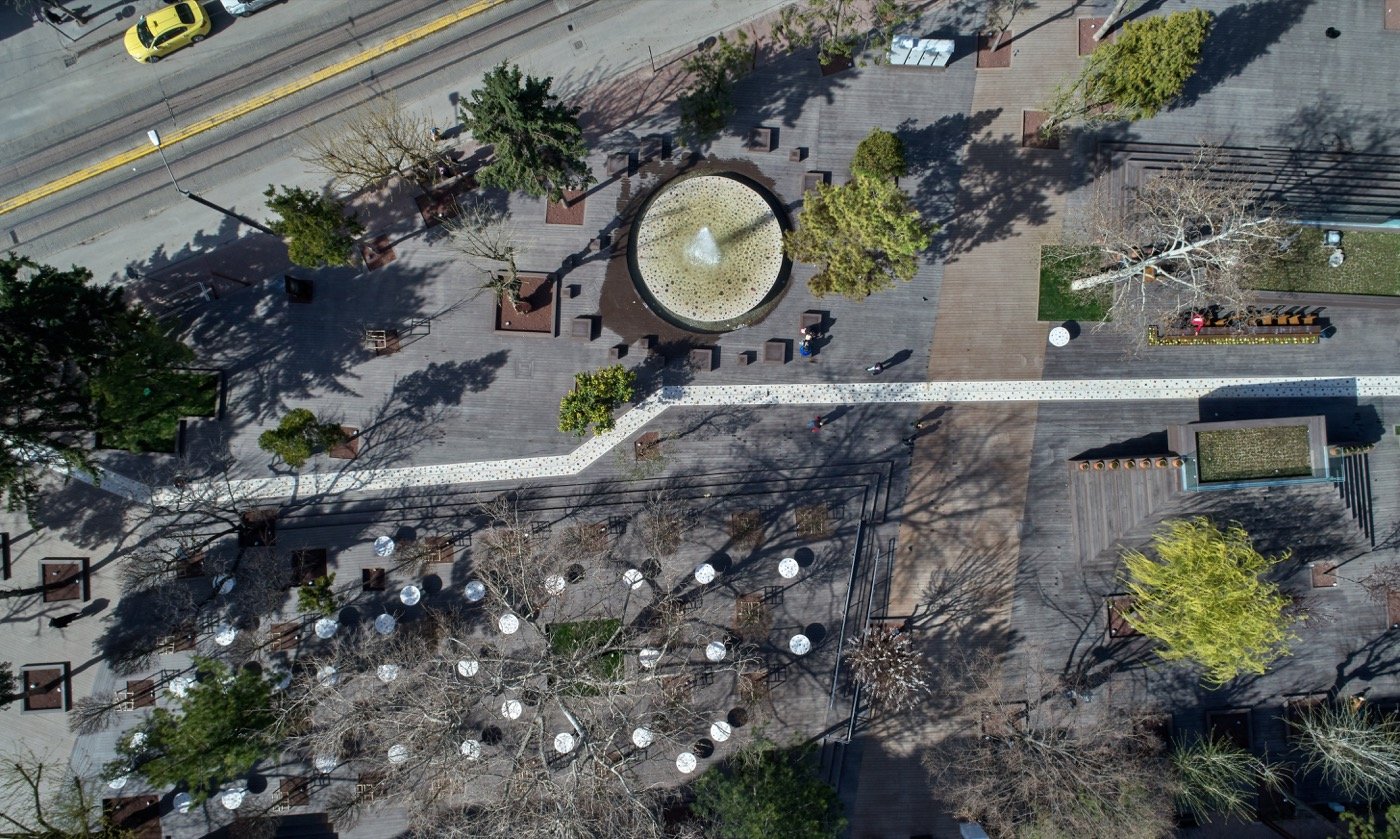
While streets often delineate districts, Kevin Lynch’s mental images remind us they can also act as stitches, linear social squares binding urban fabric. Hamamyolu Urban Deck by Yazgan in Eskişehir, Turkey, reconnects divided parts of the city through a raised promenade that doubles as bridge, park, and meeting ground. Seating capacity increased five-fold, from 1,000 to 5,000. A gesture of installing benches and other urban equipment in public spaces can allow users to linger there longer.
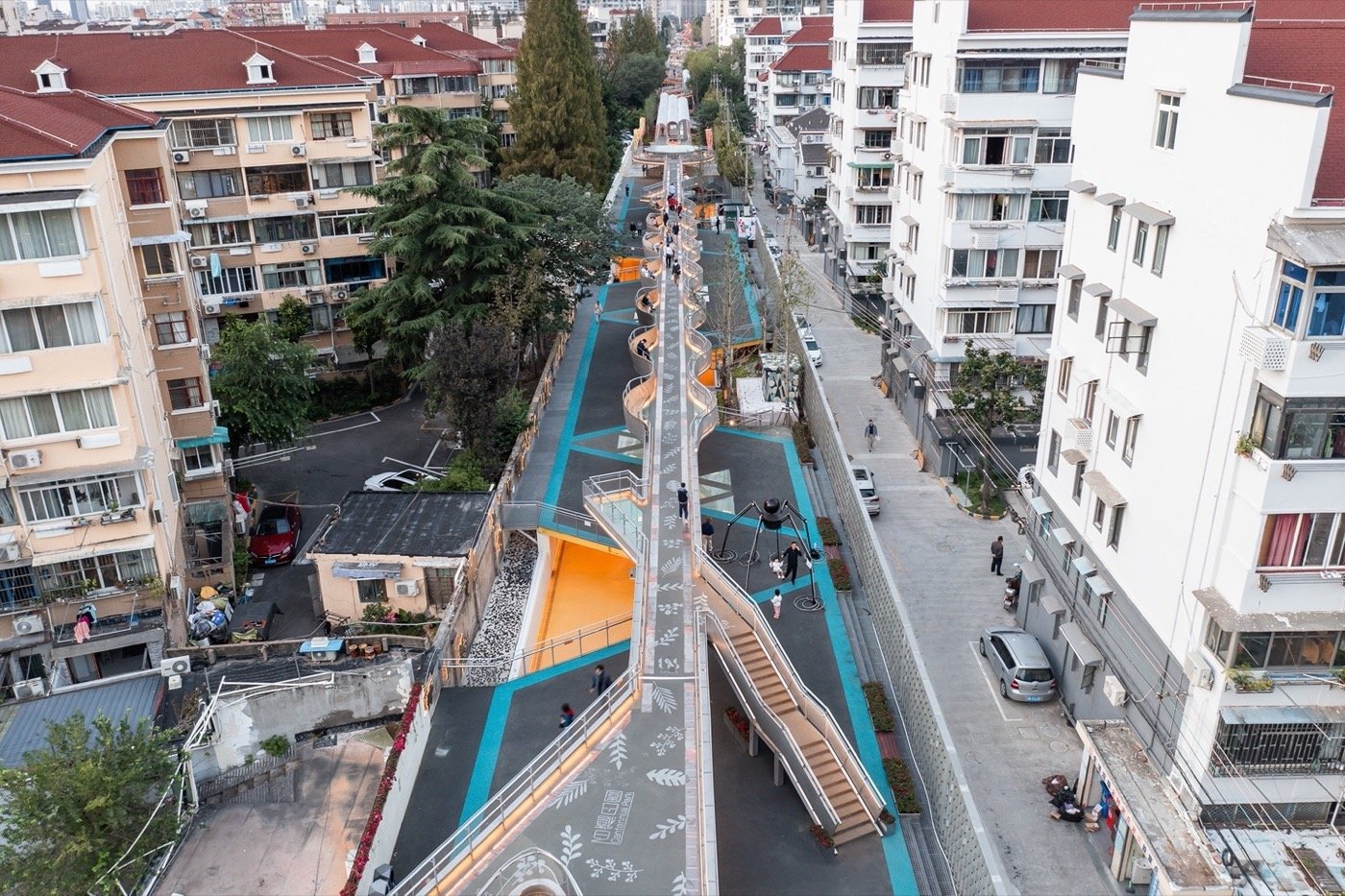
A related project, Caoyang Centennial Park by Alya in Shanghai, creates a vertically layered avenue connecting at multiple levels of the city. Though not a shared street for vehicles, it embodies the same logic: layering movement and encounter across dimensions.
Ecological function
Embedding green infrastructure goes hand in hand with creating social space. Permeable paving, bioswales, planters, runoff management, creating microclimate performance and more liveable space, turning streets into a climatic device.
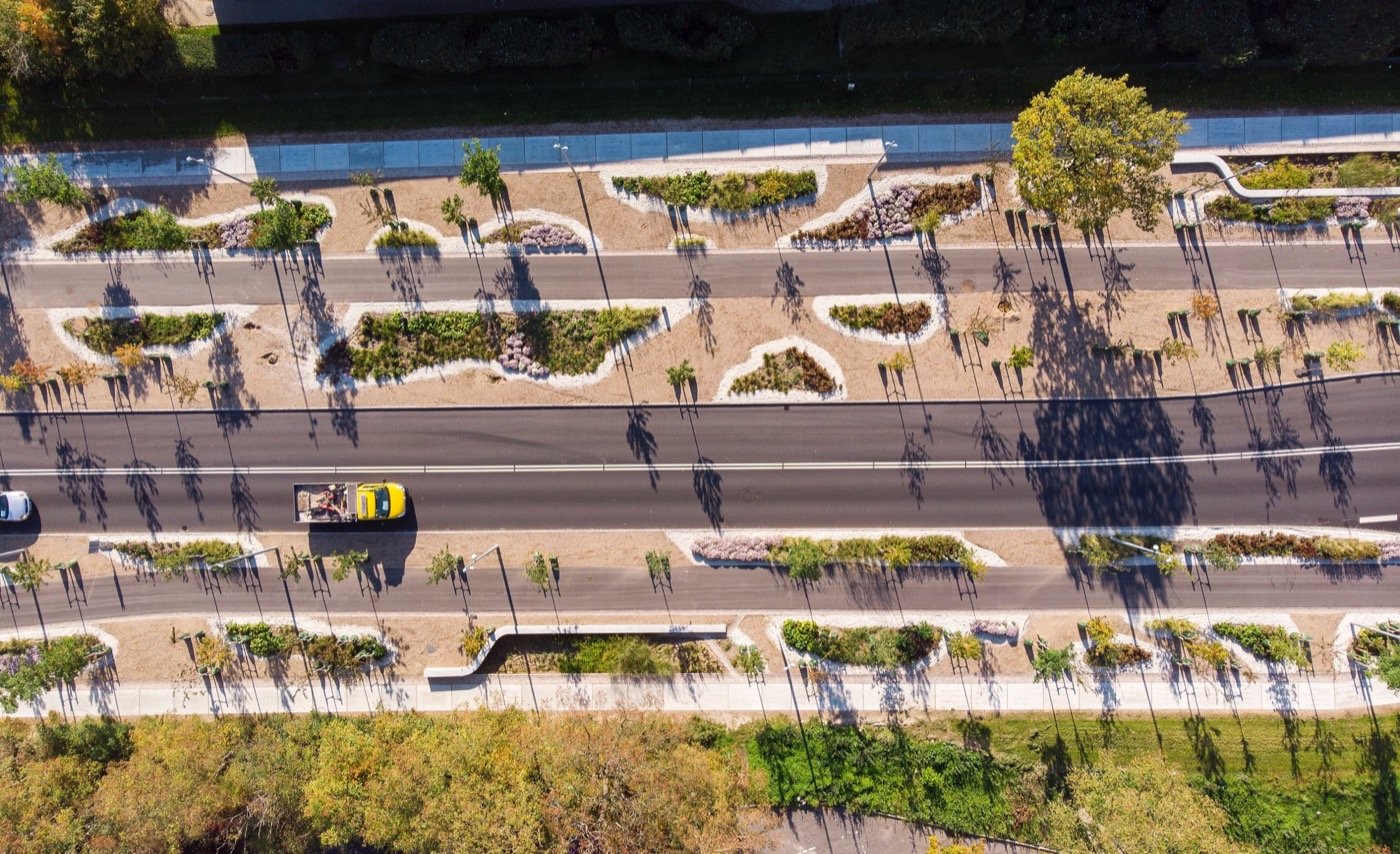
Ballerup Boulevard by Marianne Levinsen Landskab in Copenhagen reclaims two of four traffic lanes, reallocating the surface to pedestrians, cyclists, and green corridors. Stormwater systems, tree groves, and perennial planting, frame our movements and make this Boulevard a garden street, a public realm in human scale.
Tactical Urbanism as Education and Experimentation
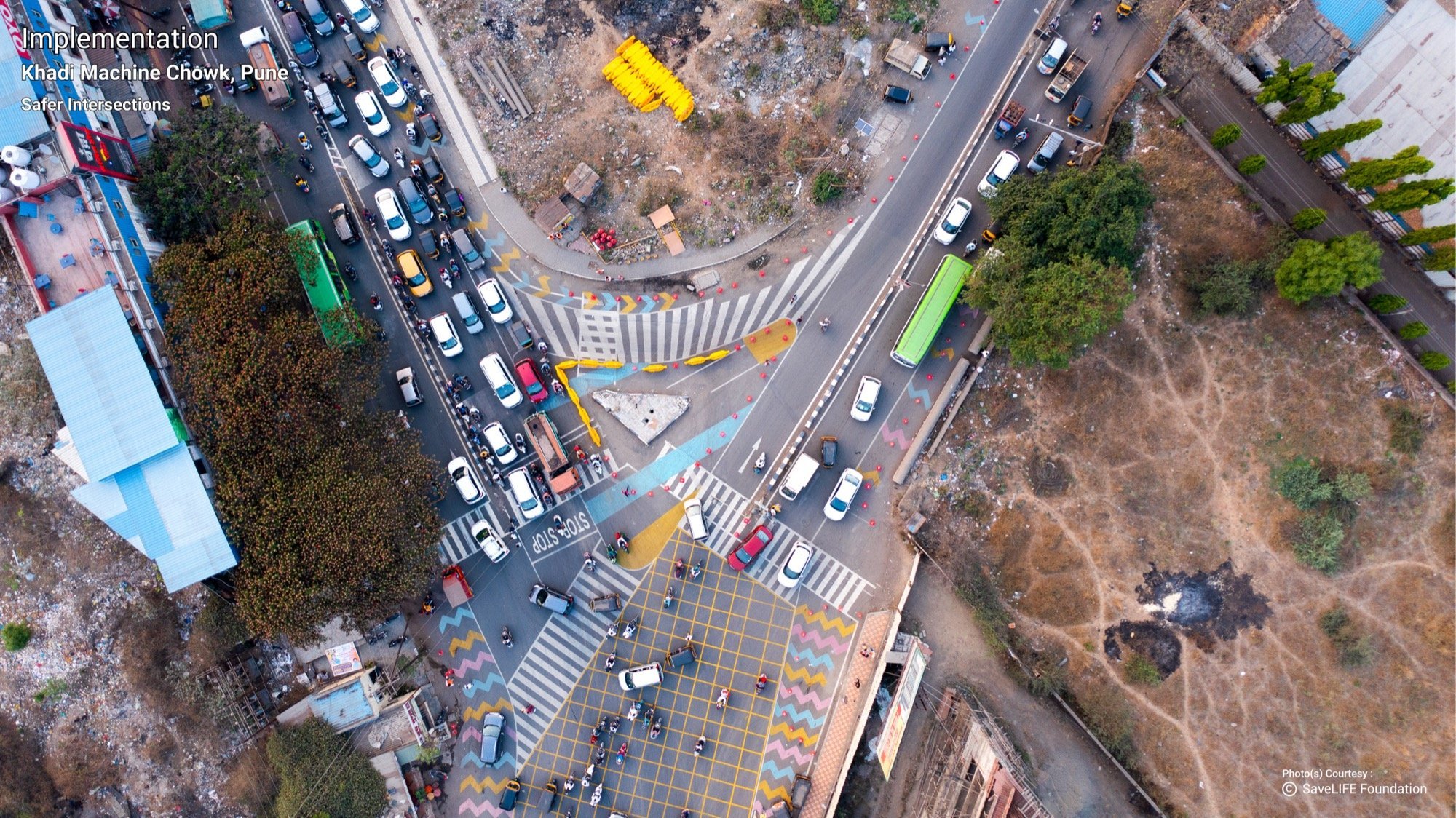
Tactical urbanism serves as both education and a prototype. It tests configurations at low cost before long-term redesign. Tactical Urbanism Trials by StudioPOD identified high-accident “black spots” in Indian cities. They approached the problem by identifying the issues, conducting interviews with users, and observing the traffic through cameras, which resulted in narrowed road widths and turning radii, and achieved measurable reductions in speed and collisions, making streets safer.
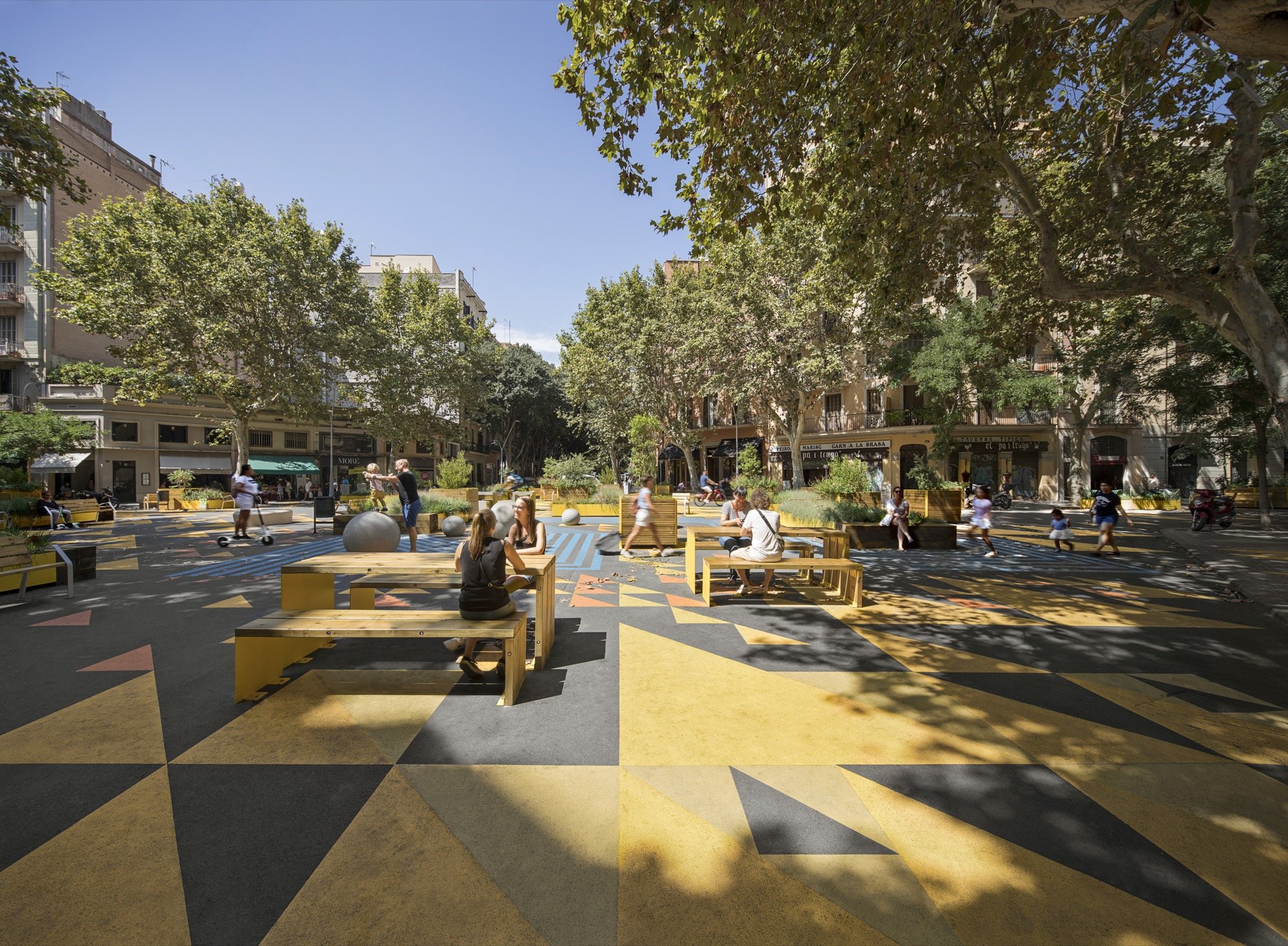
Sant Antoni Superblock by LEKU Studio represents a similar transitional stage: modular street furniture encourages experimentation, reuse, and eventual permanence. Community acceptance of temporary interventions becomes political proof for durable transformation and long-term investments.
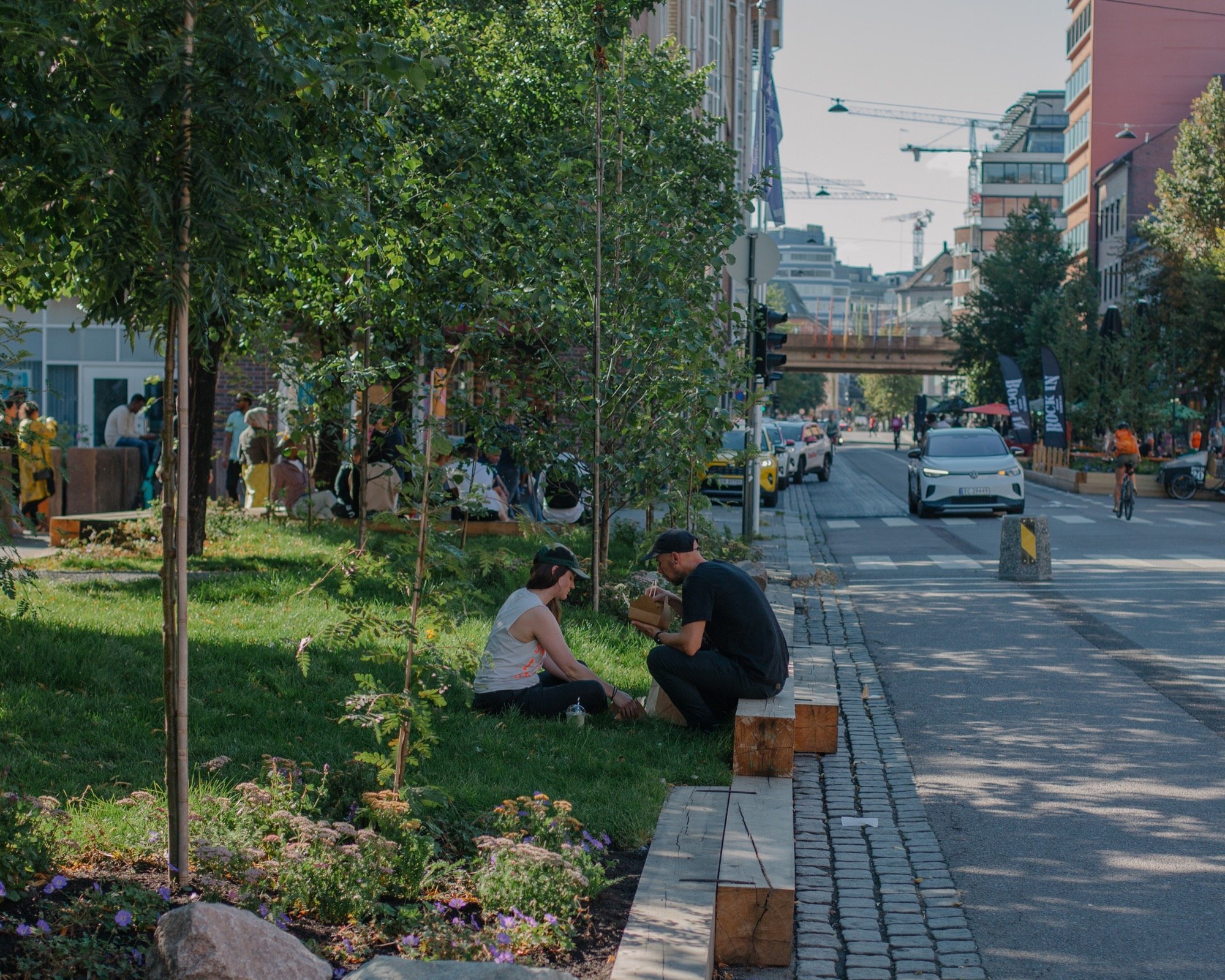
In Oslo, SLA’s Gata Grønland employs temporary green and social installations to transform grey infrastructure. While not a designed “complete street”, its informal atmosphere generated such strong local uptake and economic revival that the city decided to maintain it in the long term, which proves that tactical can become structural.
Complex Shared Streets
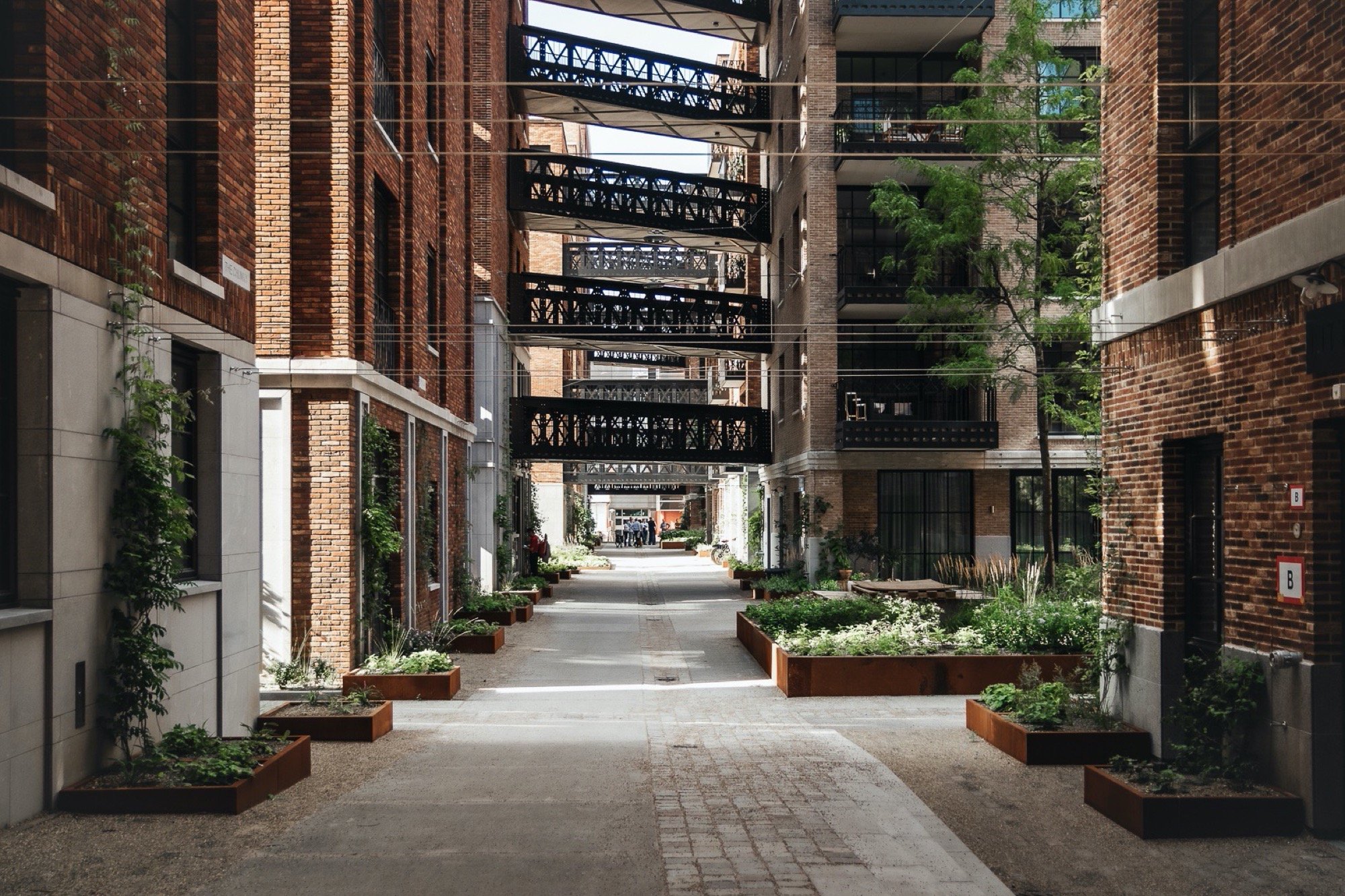
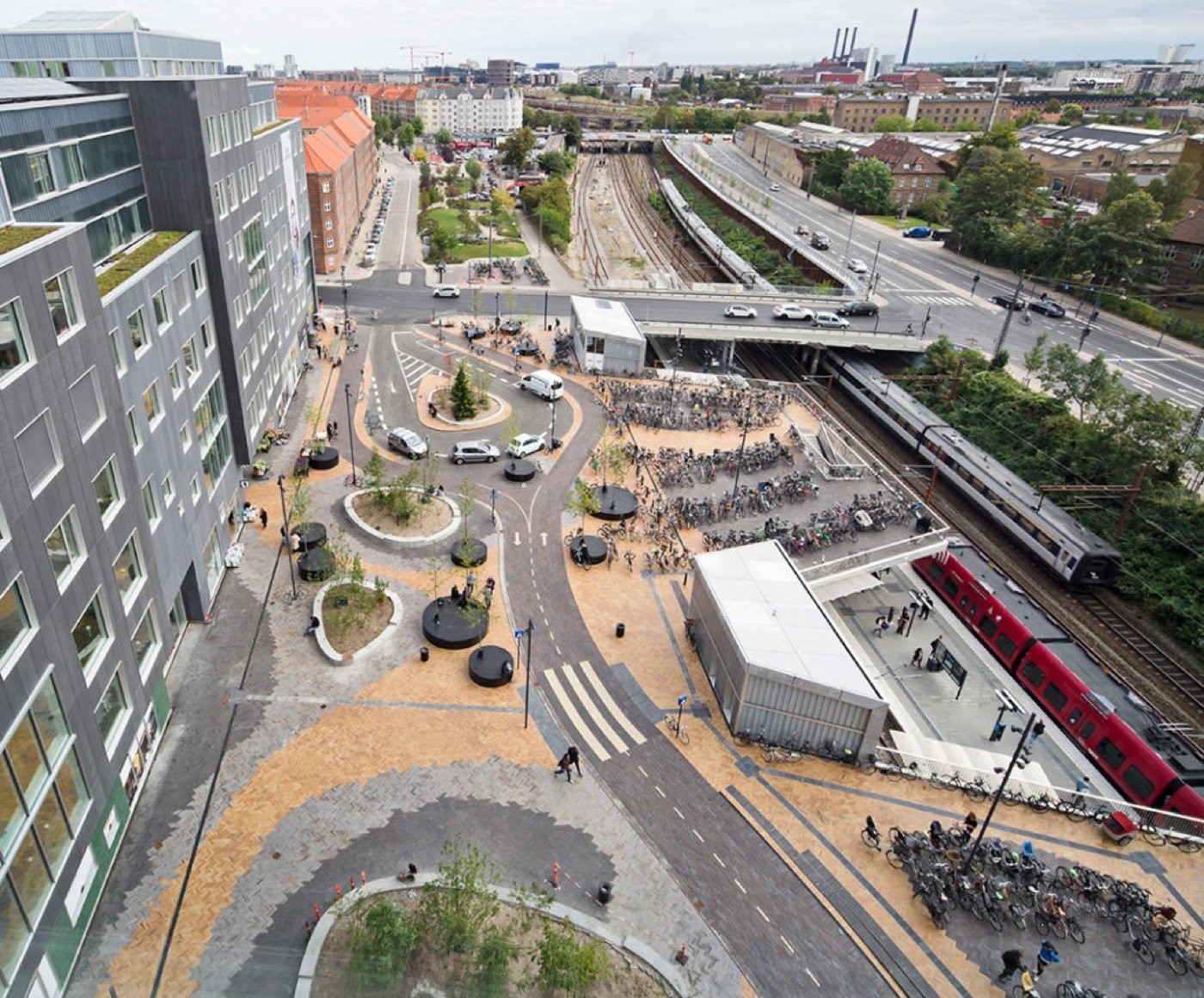
In high-density, mixed-use districts, complexity multiplies. Intermodal Streetscape in Carlsberg City District by 1:1 Landskab balances pedestrians, residents, commuters, cyclists, and vehicles within a cohesive shared surface. Urban furniture and planting define both movement and rest areas; tactile paving ensures accessibility for the visually impaired. By merging modes rather than segregating them, the design achieves coherence and legibility through spatial design rather than signage.
Shared City Streets
Barcelona’s Superblocks (Superilles) extend the shared-street ethos to an urban scale. The Eixample grid (the famous grid by Idelfons Cerdà)—long dominated by cars, with vehicles occupying 60 % of street space but representing only 20 % of users—undergoes systemic rebalancing.
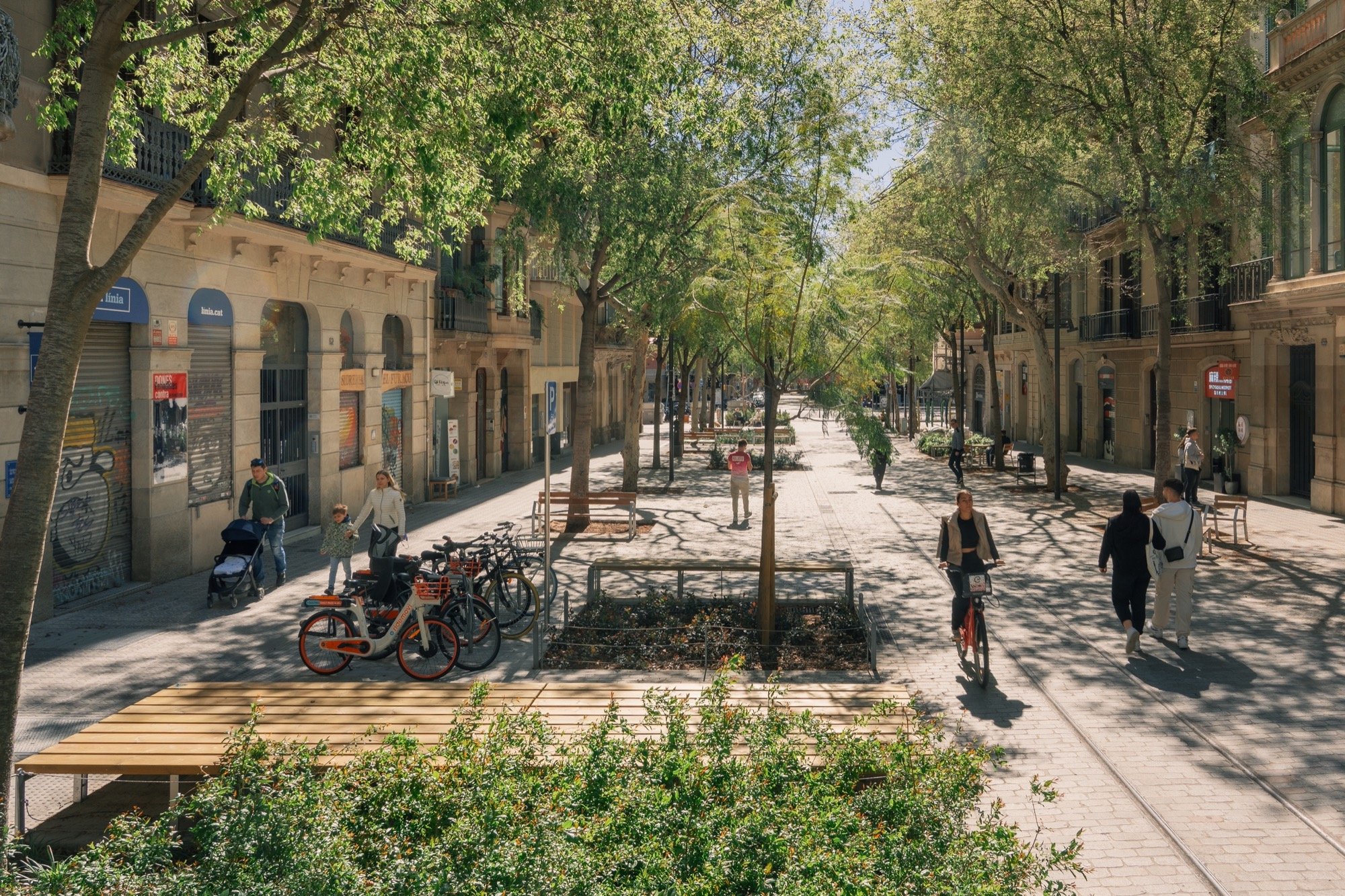
The new green axes reconfigure every third street as shared space, where cars must turn at each intersection, producing a slow, porous network of public life. The street becomes three-dimensional infrastructure: hydrological, climatic, social. Existing trees are preserved, new soils introduced, and SUDs integrated. Pavements mix the classic panot with reclaimed granite and exposed tram tracks. Timber “tatami” platforms provide informal, playful terrain.
Superblocks represent a shift from beautification toward systemic urban metabolic repair. Streets are re-imagined as ecosystems that sequester carbon, store water, and extend canopy shade, all while supporting active mobility and neighbourhood life. The Superblocks framework emerged from a 2021 municipal competition that selected four winning teams, whose collective work with city technicians produced the Model Green Axes document now guiding all future street transformations. While these are generally welcomed, some also challenge the notion of overlooked distribution and equity of revitalisations.
Street Politics
Despite their ecological and social promise, shared streets remain political terrains. The more inclusivity we design, the more we expose friction among unequal bodies. Ambiguous design can unsettle the visually impaired; highly textured surfaces can exclude skaters or wheelchair users. Every gain reveals a loss, reminding us that radical inclusivity always negotiates exclusion (sometimes in the name of safety, see Designing for People (With Bad Intentions) by Marit Noest).
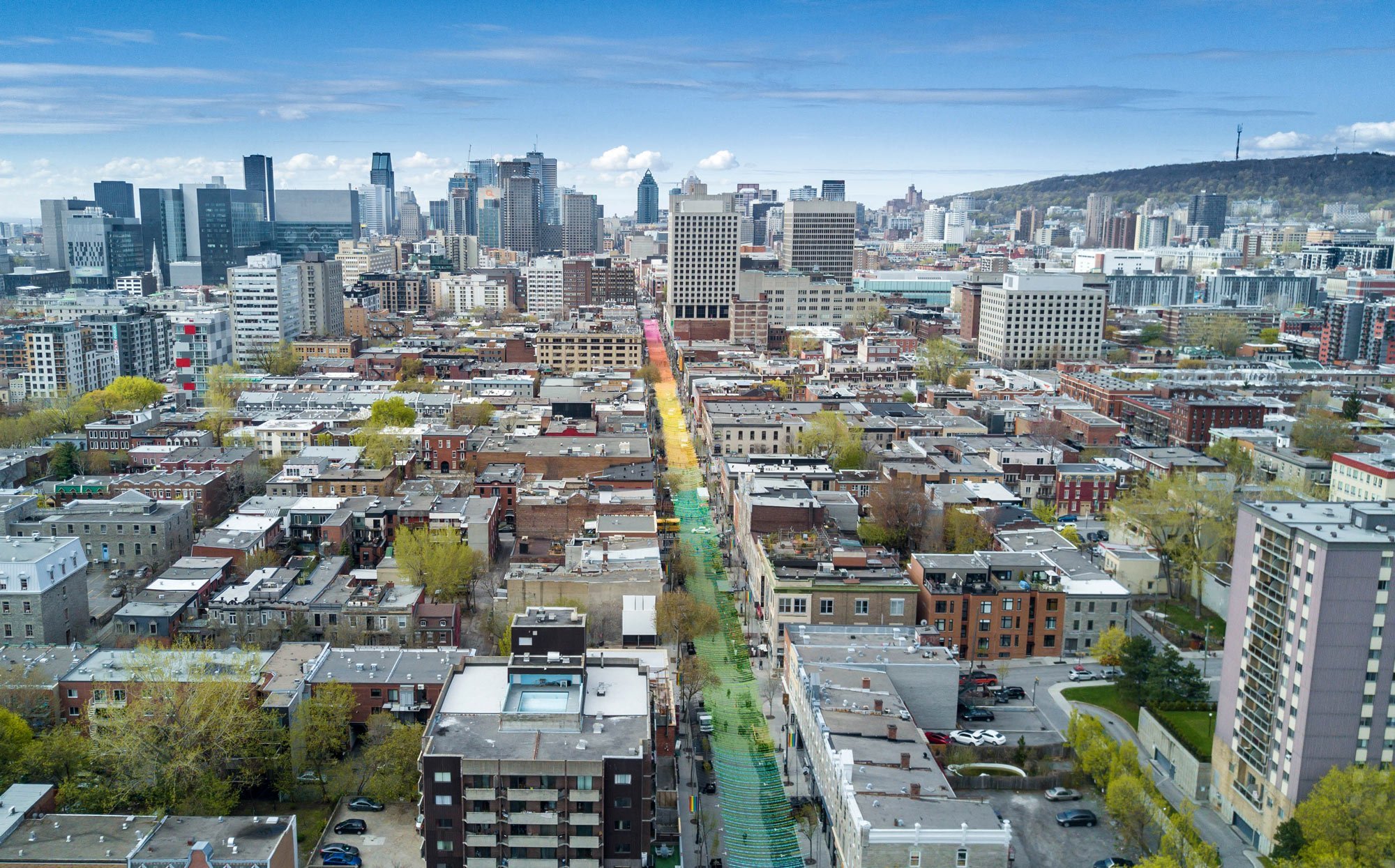
Claude Cormier’s 18 Shades of Gay reminds us that a street is never neutral. It is a political project inscribed with questions of belonging. Who owns visibility? Who performs the public? Who, ultimately, is the street for—the consumer, the child, the wheelchair user, or the worm and the sparrow?
Streets, at their best, are living portraits of society’s values, continually rewritten to reflect changing notions of policies, rights, justice, and our relationship with the world. The street mirrors the evolution of publicness.
Topics in this article
Landscape Architecture — Politics of Public Space — Resilience — Safety — Urbanism — Urška Škerl —Search other topics:
