We asked Robin Winogrond to share which publications she has been reading lately and finds particularly relevant for landscape architects today. Here is her selection:
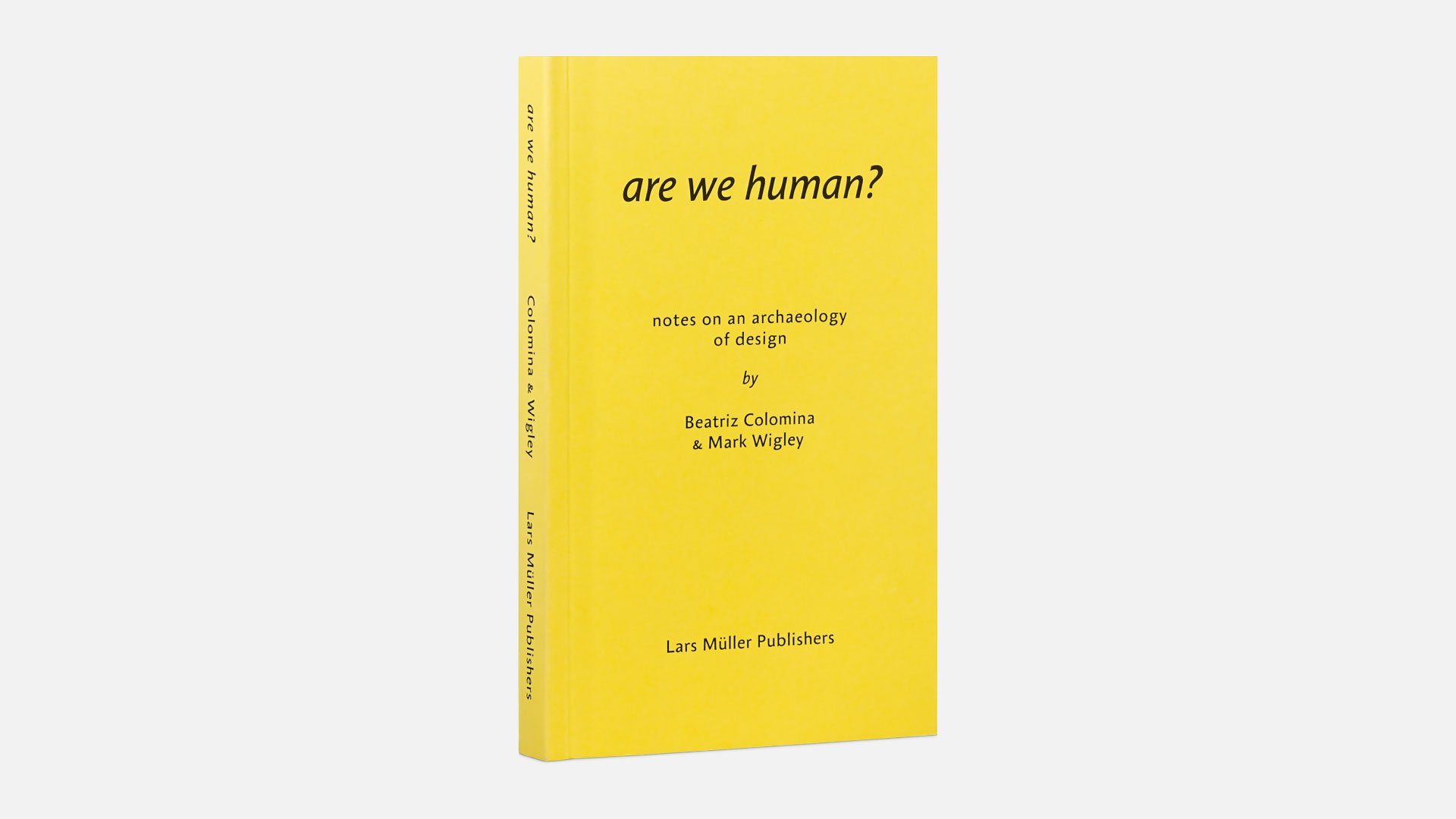
Are We Human?
Notes on an Archaeology of Design
Beatriz Colomina and Mark Wigley
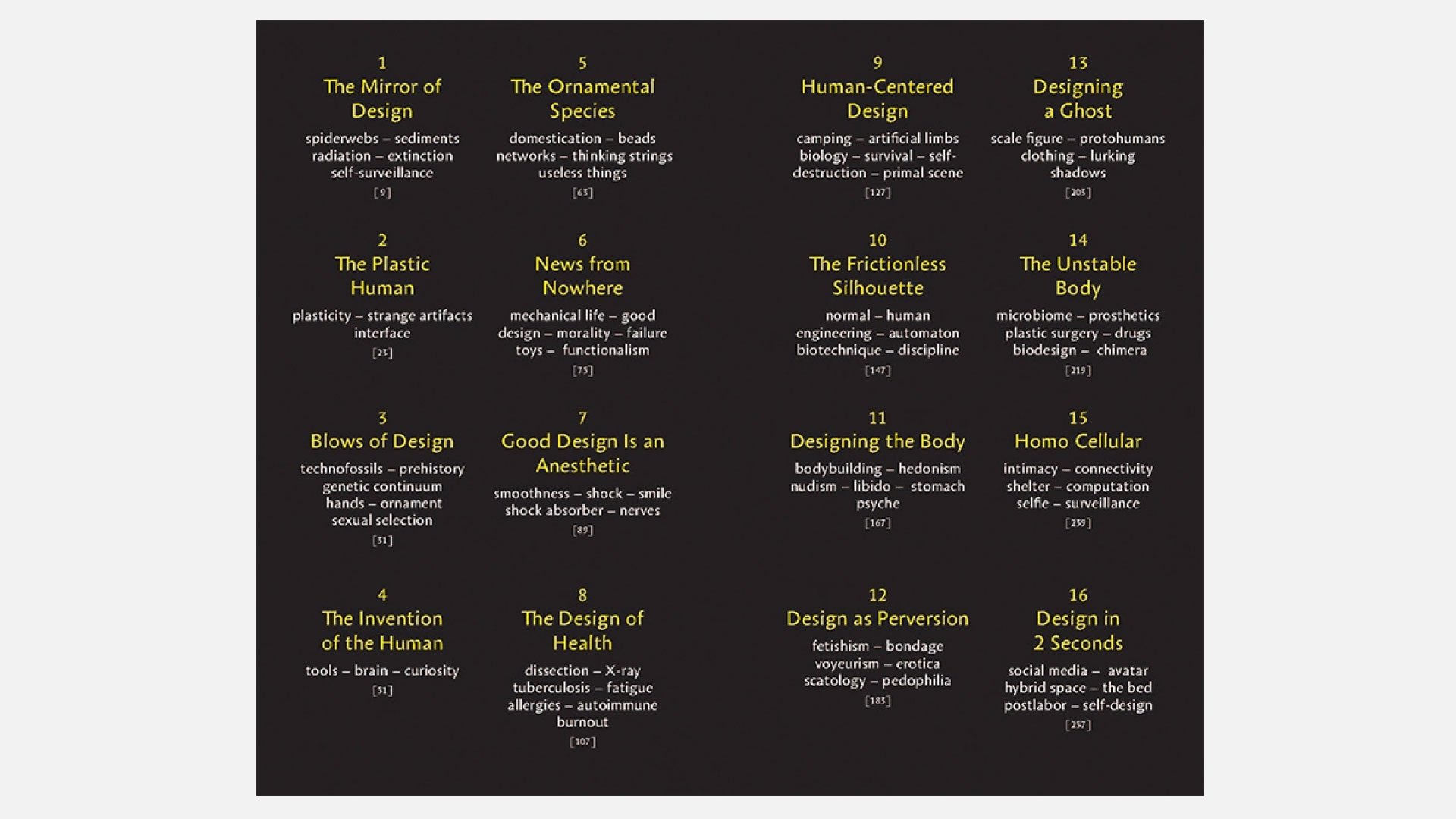
Under such premises as “to talk about design is to talk about the state of our species” and “we live in a time when everything is designed,” Beatriz Colomina and Mark Wigley invite us to reconsider the foundations of design itself. They step back from our habitual registers of perception and questions to elucidate the genealogy and intimate relationship between humans and the world of “modern design” and “good taste” we consider a necessity. Avoiding any sense of arrogance, they pose questions so simple and basic that we might have carried them around ourselves for years yet never considered asking them. And yet the connections made between human life and design are profound, breathtaking (unsettling?), and humorous—revealing the deeper layers of our daily life and the “why,” and the “what if …,” but explicitly, as well, the “What if NOT.”
Among the book’s wealth of provocations and syntheses are reflections such as Walter Benjamin’s Poverty of Experience, “Good Design” Is an Anesthetic, Design in 2 Seconds, and The Frictionless Silhouette. The book helps to give us agency for critical reflection about the designs surrounding us, using curiosity and richness of experience rather than slickness as a measure of a world that can stimulate our senses.
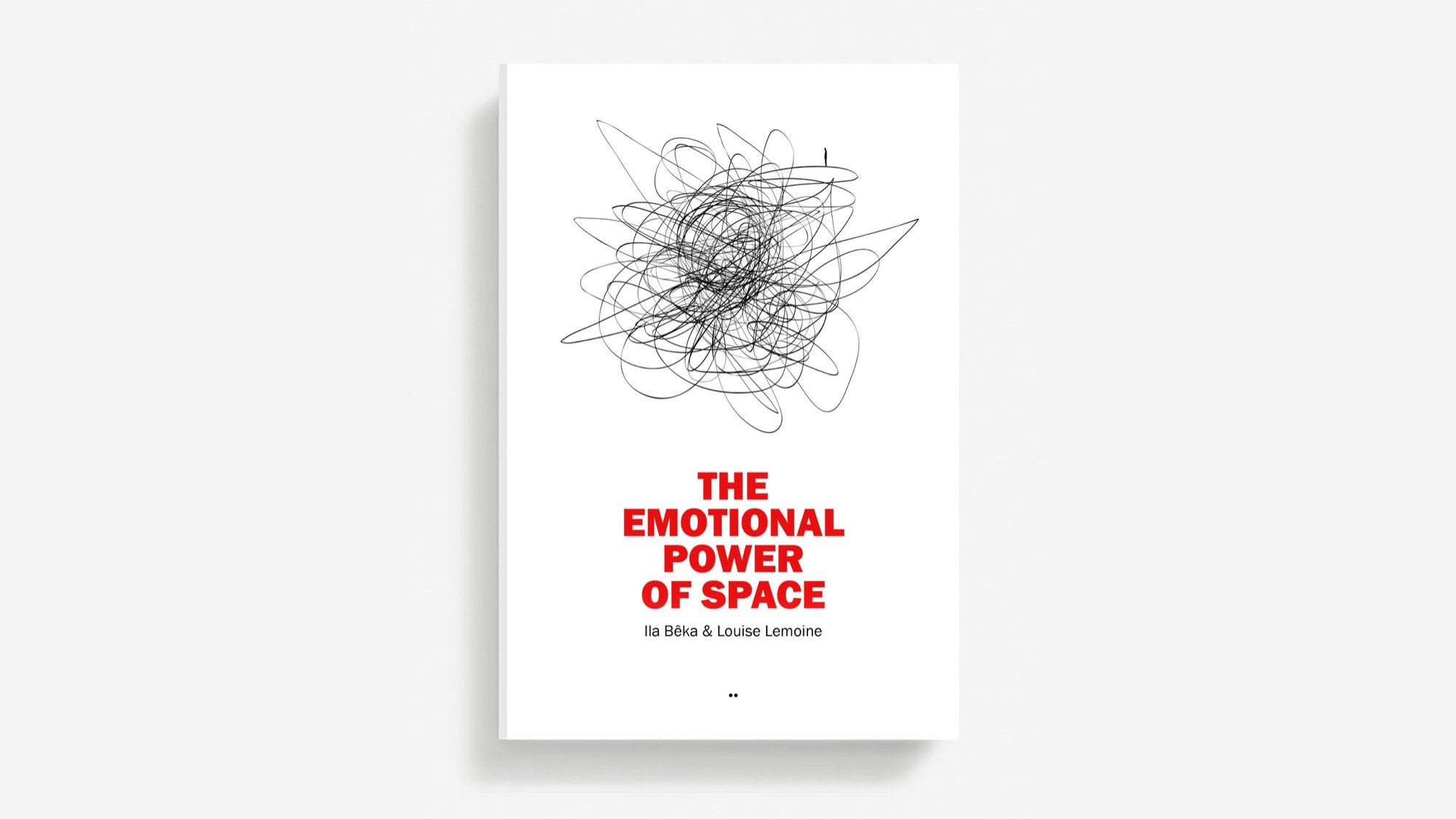
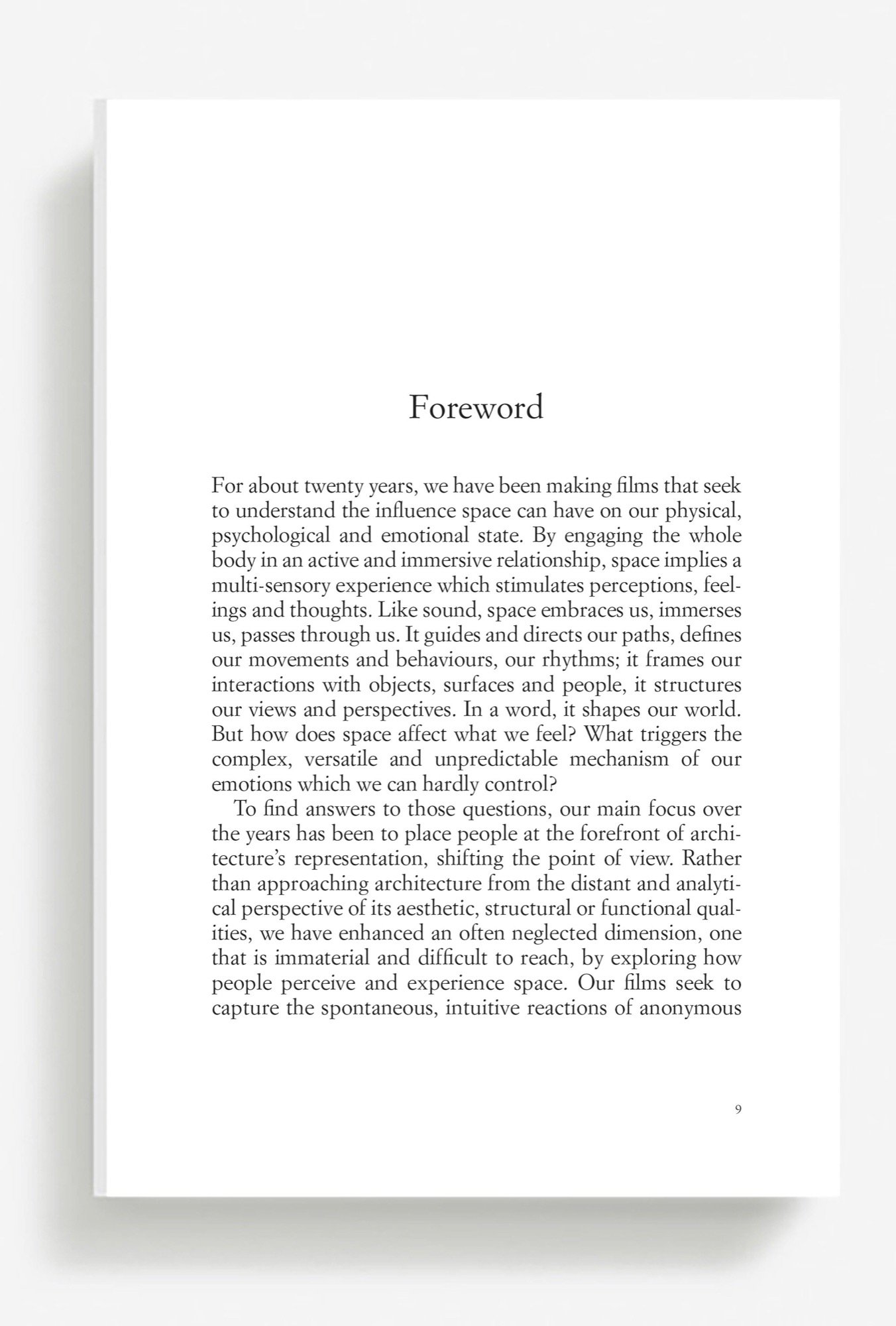
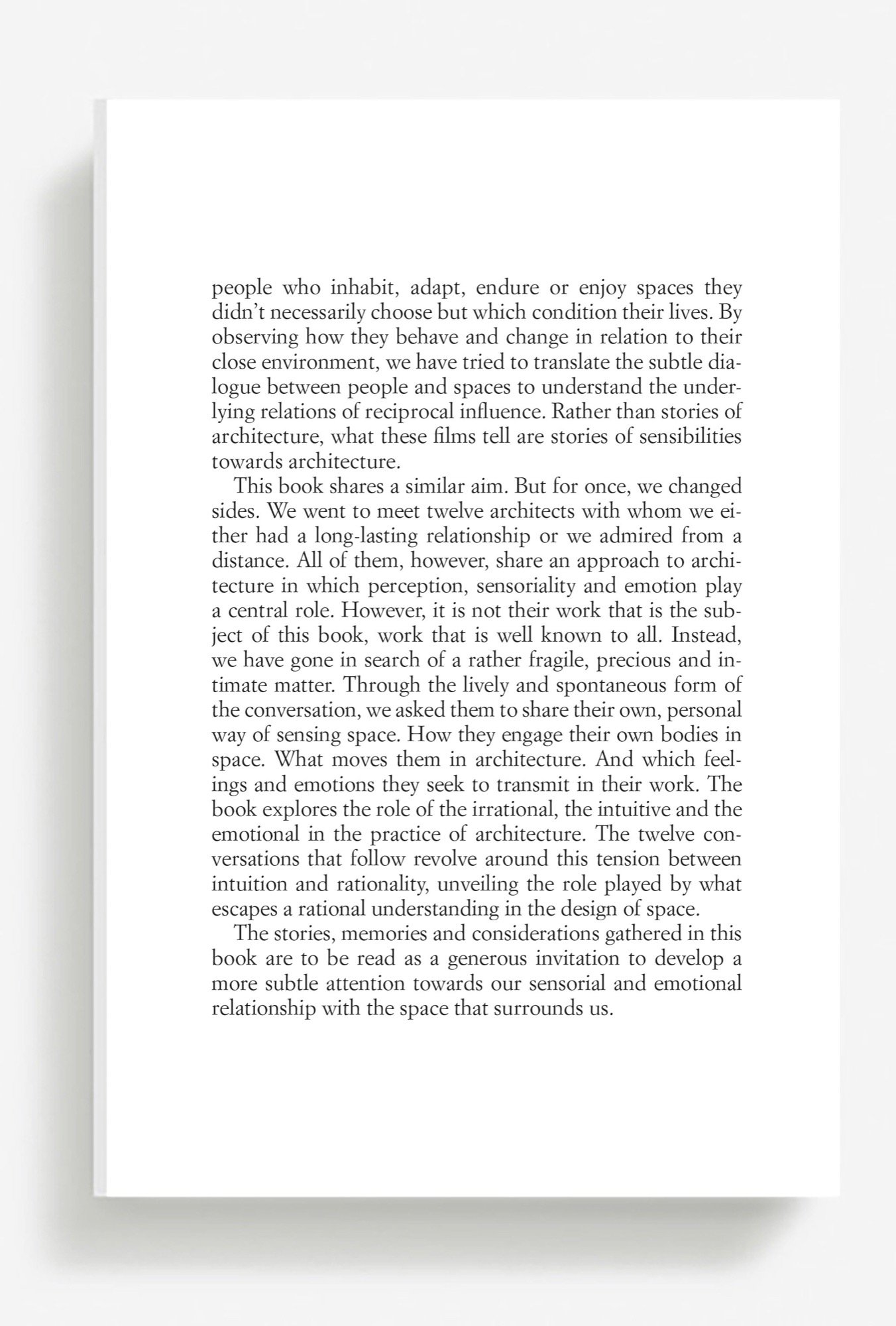
“Like sound, space embraces us, immerses us… It guides and directs our paths, defines our movements… But how does space affect what we feel?”
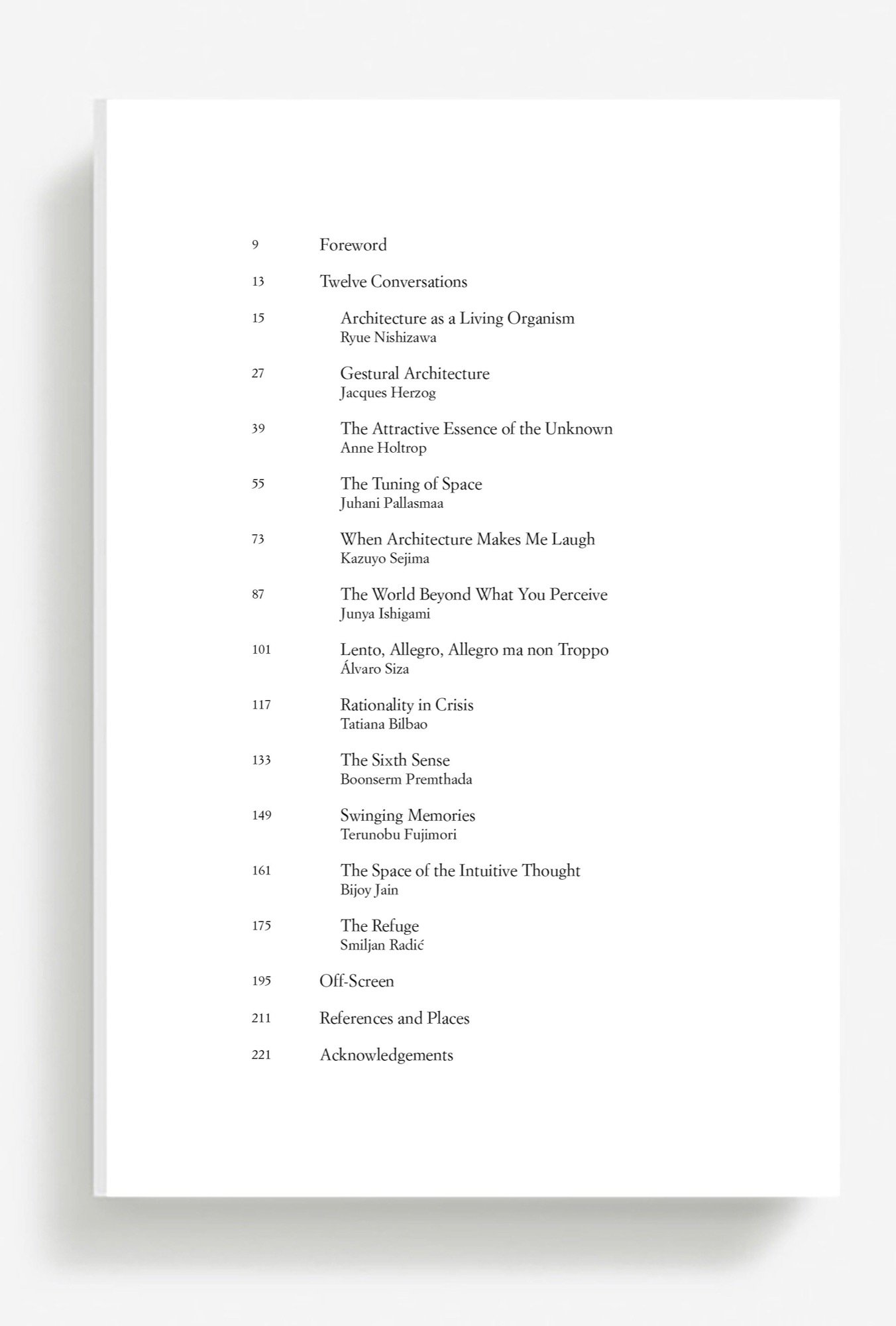
The authors, originally from the discipline of film, delve into space as a multi-sensorial experience. In poetic and personal detail, twelve architects reflect upon the immaterial questions of how we experience and relate to space. The reader slips into a wide array of anecdotes, personal perceptions, and analyses of the slippery, intuitive, and irrational nature of emotional space and emotional memory, which form a basis for architectural thought and for designing spaces of all kinds.
Among the many interviews, in The World Beyond What You Perceive, Junya Ishigami says, “More than about space, my strongest memories are related to a landscape or scenery.” Anne Holtrop’s interview, titled The Attractive Essence of the Unknown, speaks of the balance between knowing and not knowing, the unknown becoming a driving force behind his design process, one that triggers imagination. Tatiana Bilbao learned how space needs to hold the body from the spirituality of monks while working on a monastery and feels Barragán was able to build his extraordinary spaces because he was a spiritual man. Bijoy Jain writes, in The Space of Intuitive Thought, “Our relationship with the sky… With the advent of electricity, we experienced a caesura with the sky… being protected under a blanket of stars. For me this is architecture.”
Last year, we lost Robert Irwin, one of the most influential artists of the last century. He taught generations how to use a phenomenological approach to reading site. In short, he brought an awareness of the value of creating public art as site-specific and “site conditioned / determined” to a new level, one in which the perceiver has a specific and individual experience of place and phenomena. Over decades, he studied how to create works based on the phenomena of a specific outdoor environment, which in turn offered a strong, new impulse in the discourse of landscape architecture.
In the 1960s, Irwin belonged to the Los Angeles-based group of artists known as the Light and Space artists, along with James Turrell, Dan Graham, and Larry Bell, among others. They posed questions such as what kind of art could be non-object-based and what this art would then be made of. His early explorations questioned perceptions and the lack thereof—unseen phenomena in front of our eyes, such as the pillar in the center of a gallery space. He spent a year alone on an island studying his own perceptions as a basis for his artworks.
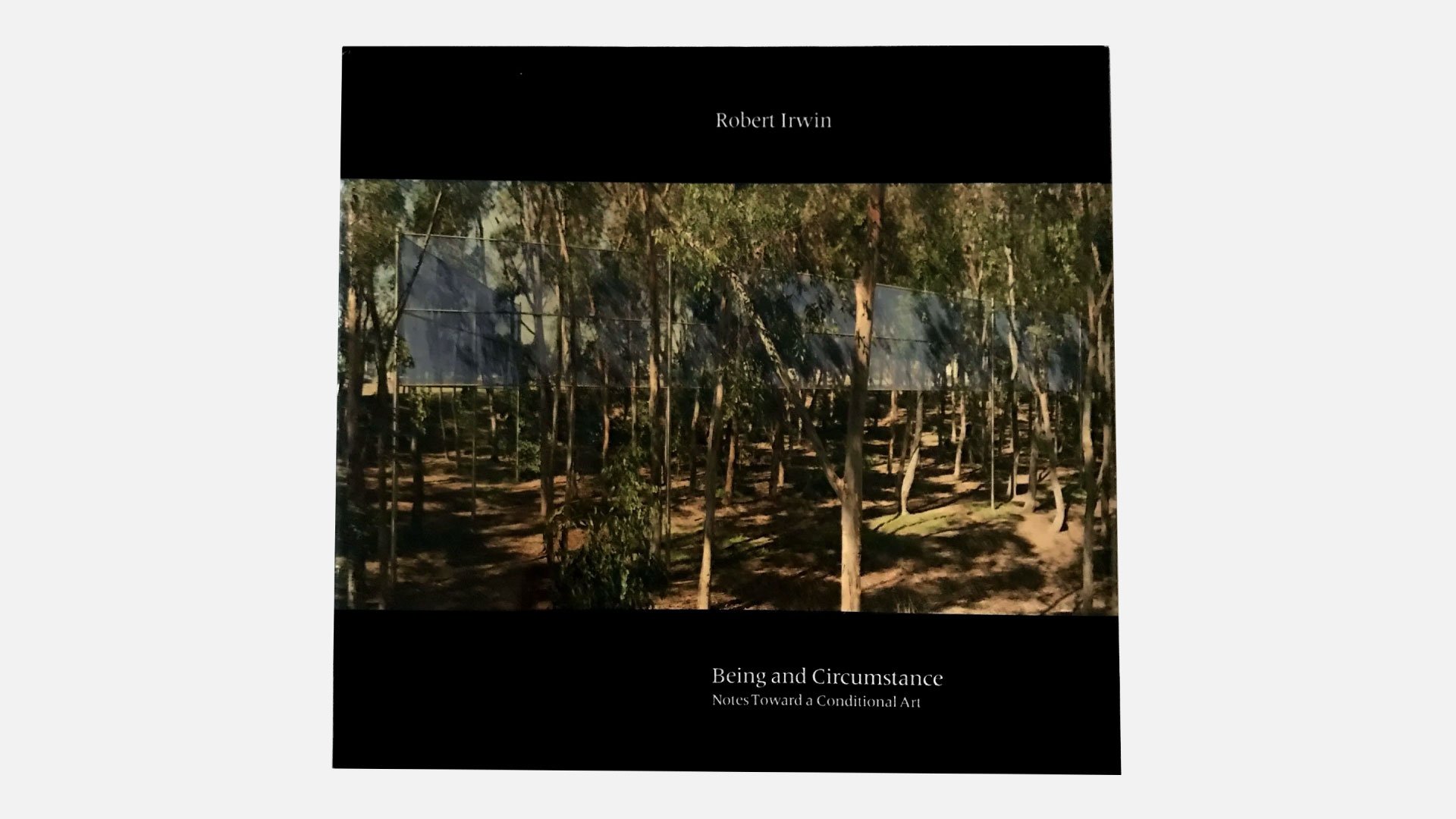
He begins his timeless, if not pivotal, book Being and Circumstance with the statement that change makes perception possible. He asks us to drop the dichotomy between the perceiver and the thing perceived, extending the boundaries of object-based art to nonobjective or phenomenal art, which “requires our immediate presence and puts individual experience at the root of our understanding.” He concludes that phenomenal art is really about seeing and not-seeing.
As difficult as it might be to access the text in its philosophical and phenomenological use of language, it sets the basis for delving into a series of projects, which he uses as testing grounds for understanding how to create installations that solely address the specific place itself. His brilliant and innovative project at Wellesley College remains one of my favorite artworks of all time.
Robin Winogrond is a landscape architect and urban designer in Zurich, Switzerland. She practices internationally on projects, juries, lecturing, teaching and publishing. From 2019-2021 she taught design studios as a Visiting Design Critic at Harvard GSD. Her interdisciplinary background, reflected in an array of prize-winning projects, ranges from built urban spaces, installations and gardens to concepts for large and small-scale open spaces. She was a Resident Artist at Stuttgart Academy of Art and holds a Master’s in Landscape Architecture and Bachelor’s in Urban Design.
To provide the best experiences, we use technologies like cookies to store and/or access device information. Consenting to these technologies will allow us to process data such as browsing behavior or unique IDs on this site. Not consenting or withdrawing consent, may adversely affect certain features and functions.
Functional Always active
The technical storage or access is strictly necessary for the legitimate purpose of enabling the use of a specific service explicitly requested by the subscriber or user, or for the sole purpose of carrying out the transmission of a communication over an electronic communications network.
Preferences
The technical storage or access is necessary for the legitimate purpose of storing preferences that are not requested by the subscriber or user.
Statistics
The technical storage or access that is used exclusively for statistical purposes.The technical storage or access that is used exclusively for anonymous statistical purposes. Without a subpoena, voluntary compliance on the part of your Internet Service Provider, or additional records from a third party, information stored or retrieved for this purpose alone cannot usually be used to identify you.
Marketing
The technical storage or access is required to create user profiles to send advertising, or to track the user on a website or across several websites for similar marketing purposes.
To provide the best experiences, we use technologies like cookies to store and/or access device information. Consenting to these technologies will allow us to process data such as browsing behavior or unique IDs on this site. Not consenting or withdrawing consent, may adversely affect certain features and functions.
Functional Always active
The technical storage or access is strictly necessary for the legitimate purpose of enabling the use of a specific service explicitly requested by the subscriber or user, or for the sole purpose of carrying out the transmission of a communication over an electronic communications network.
Preferences
The technical storage or access is necessary for the legitimate purpose of storing preferences that are not requested by the subscriber or user.
Statistics
The technical storage or access that is used exclusively for statistical purposes.The technical storage or access that is used exclusively for anonymous statistical purposes. Without a subpoena, voluntary compliance on the part of your Internet Service Provider, or additional records from a third party, information stored or retrieved for this purpose alone cannot usually be used to identify you.
Marketing
The technical storage or access is required to create user profiles to send advertising, or to track the user on a website or across several websites for similar marketing purposes.